
GUT Special · First Edition — September 2026
Dresden for Gay Travelers
The City That Put Itself Back Together
In this guide
More than an afternoon
When Dresden’s tourism board invited us to spend a few days in the city, I privately assumed it had about an afternoon’s worth to show me.
Berlin is the city most gay travelers reach for when they think of Germany, and they reach for it for good reasons. Dresden, two hours south by train, was in my head a half-day city — a cathedral, a river, a walk along the Elbe, and that would be that. I changed my mind within a day. Dresden is not a stop you fold into a trip aimed somewhere else. It is a destination in its own right — one that rewards several unhurried days, because it simply has that much to give. Everything that follows in this guide is what I found once I gave it the time.
Here is what changes your mind. In February 1945, Dresden was bombed nearly flat. Most of the city you would have wanted to see no longer existed. And then, across decades, Dresden made a decision I find quietly extraordinary: it chose to put itself back together — not as a modern city laid over the ruins, but as the city it had been, stone by stone, the proportions restored, the Baroque returned.
Berlin, to the north, lets its scars stand. Its broken church is left broken on purpose, as a memorial — one honest way for a city to carry its history. Dresden chose the other way. It decided, deliberately, what it wanted to be again, and then did the long work of becoming it.
A city that chooses itself that carefully is a particular kind of place. It tends, I have found, to be just as deliberate about people.
A city that chose itself
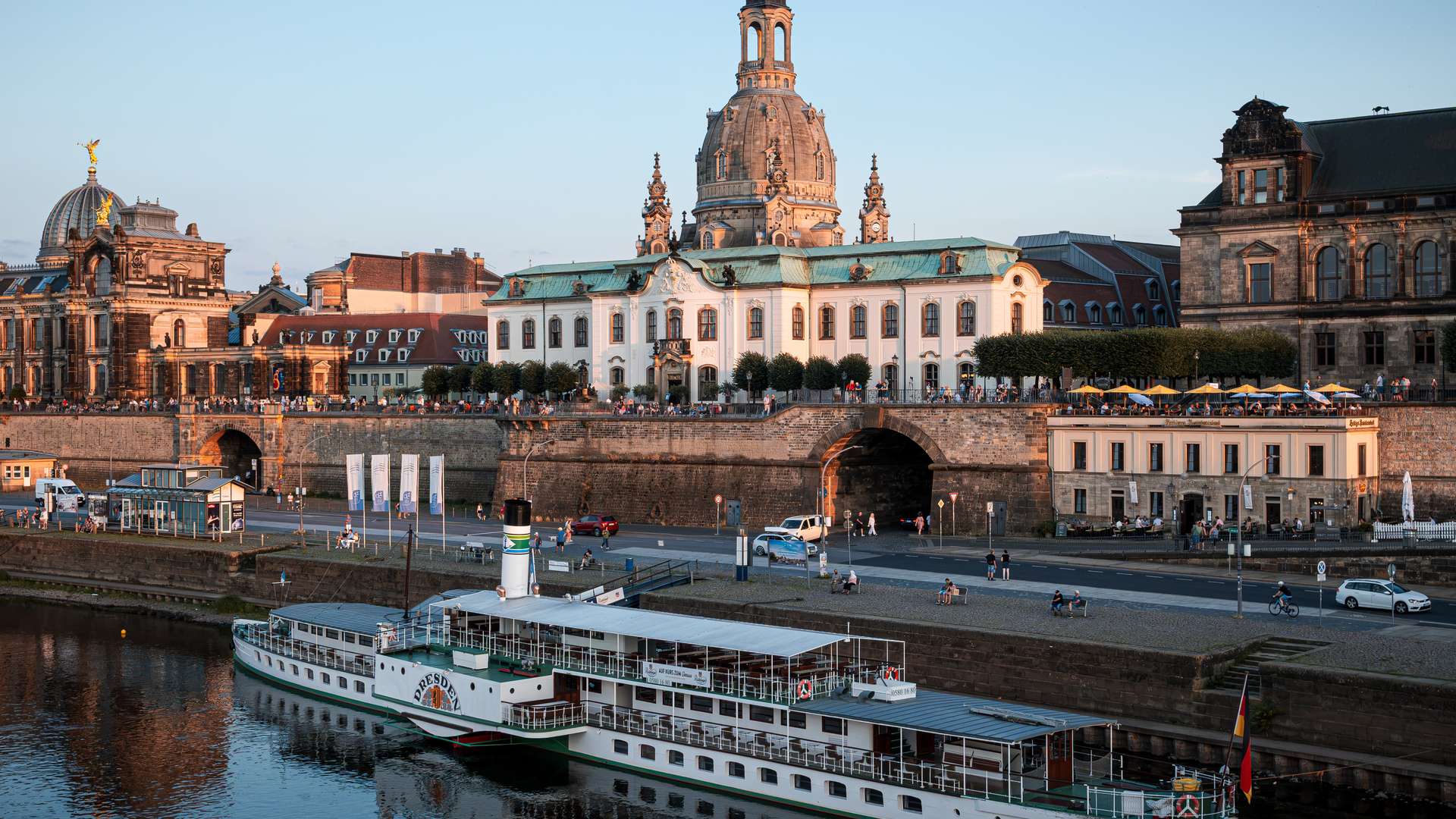
The clearest place to see this is the Frauenkirche, the great domed church at the heart of the old town. It was destroyed in 1945, and for the next half-century its rubble was left where it fell, as a memorial. Then, after reunification, Dresden rebuilt it — and rebuilt it using the original stones wherever they could be recovered and set back where they belonged. Look closely at the facade and you can read the city’s whole character in it: the dark, soot-blackened blocks are the salvaged originals, the pale ones new. The building is, visibly, a thing that was put back together by choice.
But the instinct is far older than the war. Dresden has always been a city that decided, deliberately, what it wanted to be.

Walk into the Zwinger and you feel the ambition of it. You reach it through a gate crowned — literally — with a gilded crown, the Kronentor, which has become the city’s signature. Beyond it a courtyard opens, far vaster than you expect. The Zwinger was never a fortress, and never an ordinary residence. It was built as a palace of representation: a stage for the court’s festivities, a setting designed to be seen. Three centuries ago, Dresden was already constructing the version of itself it wanted the world to admire.
You see the same will a few steps away, in the Catholic cathedral that stands beside the royal palace. Saxony is the heart of Protestant Germany — this is Luther’s country, and its rulers were Protestant by tradition. And yet here, in that Protestant heartland, stands a full Catholic cathedral, designed by an Italian architect, because the ruling house had reasons of its own and built what it wanted anyway. It is close to a contradiction made of stone.

This is also why Dresden was long ago nicknamed “Florence on the Elbe.” It is not only the river light and the domes. It is that Dresden deliberately imported the culture it admired — Italian architects, Italian taste — and kept it. The painting gallery in the old town holds one of the great collections of the Italian Renaissance outside Italy: Raphael, Titian, Correggio. As an Italian, I will admit this moved me more than I had planned for. But the point is simpler than my feelings about it: Dresden is a city that, for three hundred years, has chosen what it loves and then made room for it.
Hold that phrase — made room for it. It is the whole story.
The people the city kept
Because a city with that temperament does not only make room for buildings and paintings. It makes room for people.
Long before Berlin became the obvious answer, Dresden was a city gay men quietly chose — and chose for a concrete reason. For much of the nineteenth century, Saxony did not criminalize relationships between men the way Britain, and later a unified Germany, did. For someone with the means to live where he wished, that made Dresden not a refuge exactly, but something better: an ordinary place, where an unremarkable life was possible.
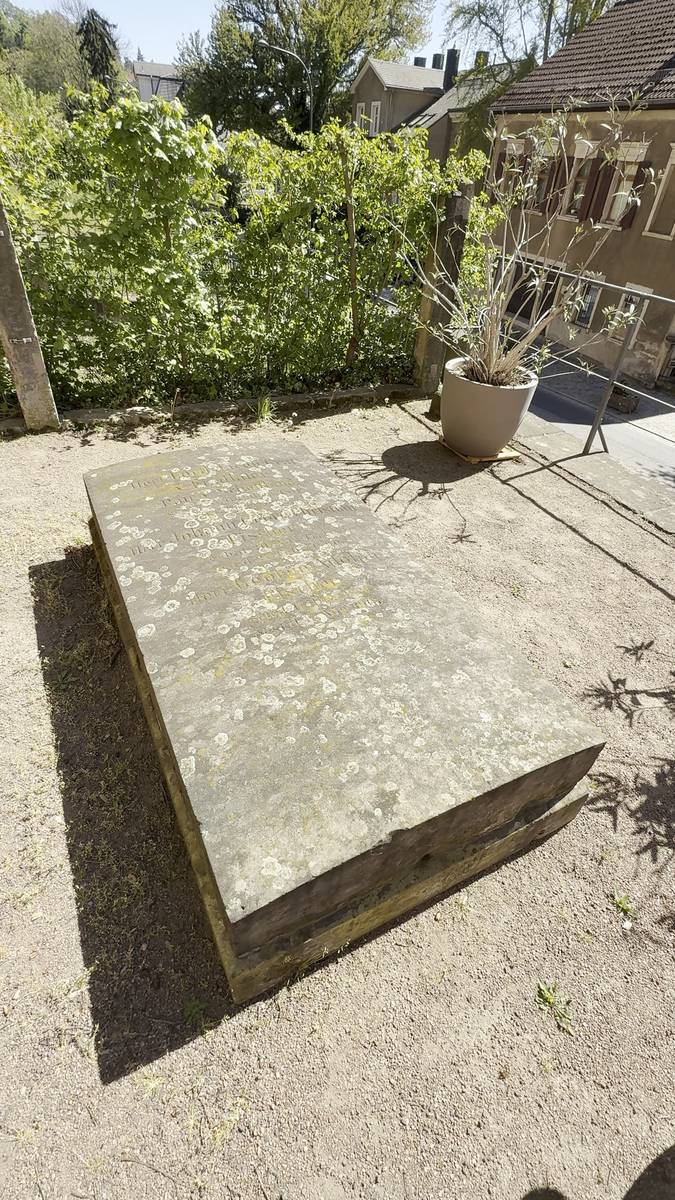
A Scottish earl, Lord Findlater, settled here in the early 1800s with his companion — and the two of them are buried together, up in Loschwitz, on the hillside above the river. A century before him, the Venetian writer and connoisseur Francesco Algarotti — a man whose attachments to other men were no secret in his own time — moved through the Saxon court, buying art for its kings. And Sascha Schneider, the painter whose images of the male nude illustrated the most popular German adventure novels of his day, lived and worked here too.
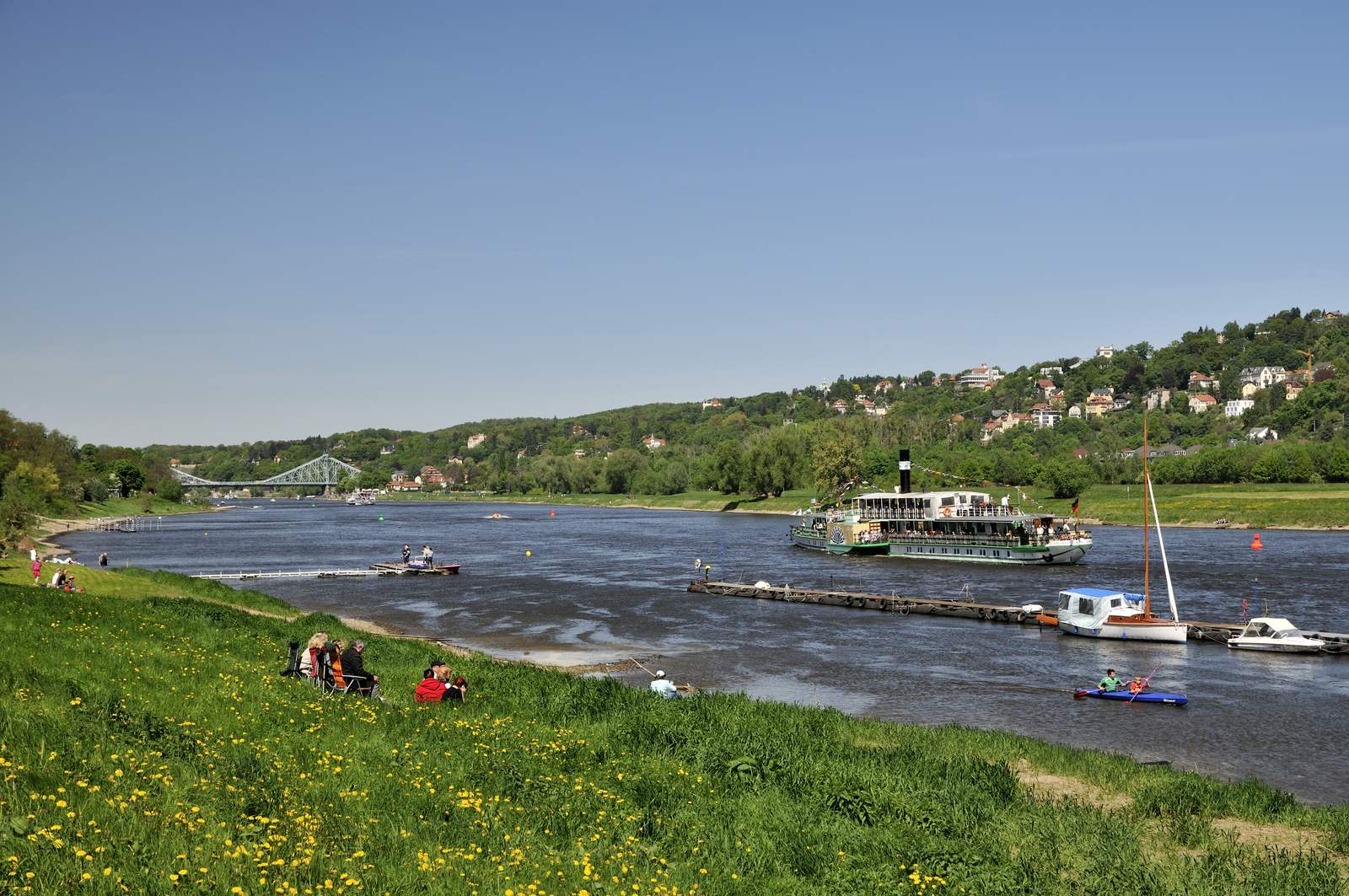
Loschwitz itself tells you something. You reach it by boat, and on a clear day that river hour is simply one of the most beautiful Dresden offers — the historic center sliding past on one bank, the newer districts on the other, then the hills opening up green and lined with the villas the city’s nobility built as summer houses. Loschwitz is one of those hillside villages: elegant, unhurried, a place people came to live well.
That is the texture I want you to notice. Dresden’s gay history is not sealed in a single museum or a single street. It is folded into the most desirable part of the city, among the summer villas and the river views. None of these men built their lives around being gay. They built their lives in a city that simply let them — and then kept them, the way Dresden keeps everything it decides is worth keeping.

Lili Elbe
The most moving chapter of that history belongs to Lili Elbe.
She was a Danish painter, and in 1930 she came to Dresden because a clinic here was willing to attempt what no other clinic would. Lili Elbe was one of the first people known to undergo gender-affirming surgery — a series of experimental and genuinely dangerous operations. She did not survive long; she died in 1931, of complications. But she lived her last years as herself, and she lived them here. Many travelers will already know her story without knowing they do: it is the basis of the film The Danish Girl.
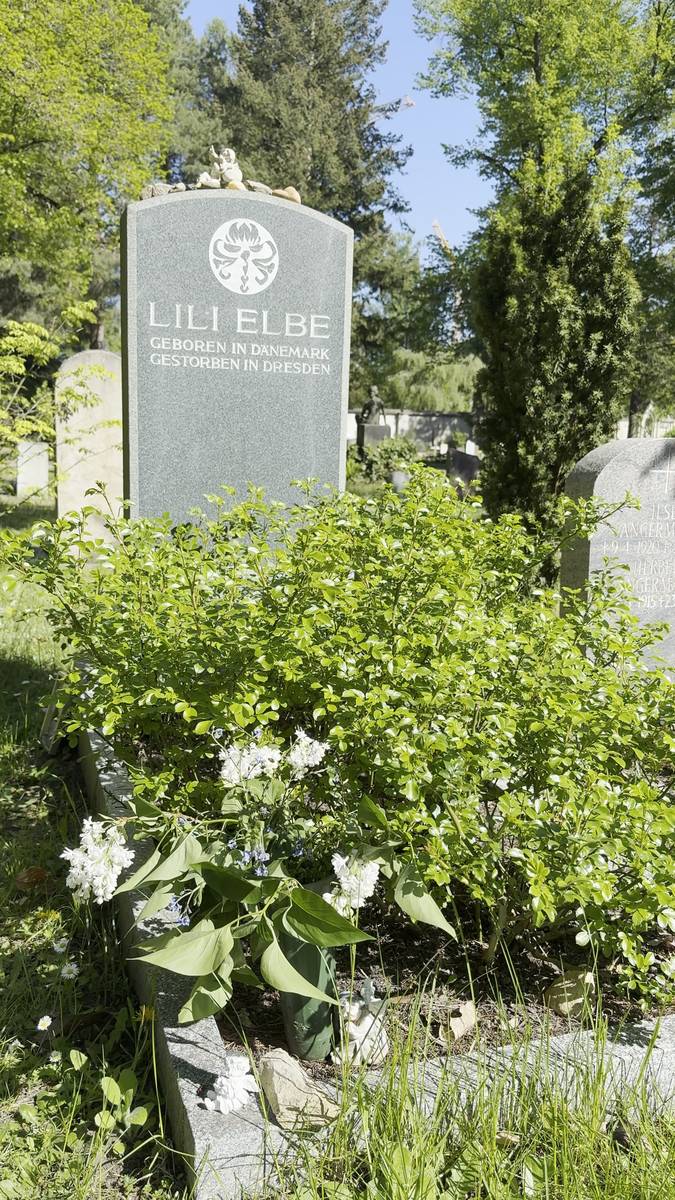
What stays with you is not the medical history. It is how Dresden has chosen to remember her. There is a street that carries her name. There is a grave that had, at one point, been lost — and that the city later chose to restore. Dresden decided she was worth keeping.
I went to that grave. I am not, by nature, someone who performs his feelings, and I won’t perform this one. I left a single flower, stood there a while, and then we moved on. I will only say that, standing in front of it, the idea behind this whole guide stopped being an idea and became something I could feel: a city that deliberately chooses what it puts back, what it names, what it refuses to let disappear. Lili Elbe is not a footnote Dresden tolerates. She is someone Dresden chose to keep.
A few days in Dresden
So — what do you actually do here? This is the part where the trip stops being history and becomes an itinerary. What follows is not the full program. It is the GUT selection: the things I would tell a friend not to miss. You will already have been on the river, since that is how you reach Loschwitz. Here is the rest.
The Old Masters, with the right eye
Give the painting gallery a real morning, not a rushed hour. Beyond the famous Raphael, look for the quieter thread: the way the European canon has always made room for the male body and the longing in it — a Saint Sebastian by an Italian master, the classical sculptures, the ideal of beauty that the scholar Winckelmann shaped here in Dresden. It is a line most tours never point to, and once you have seen it you cannot unsee it.

The Green Vault
The royal palace holds one of the greatest treasuries in Europe — over a thousand objects, and one in particular that stops you: a miniature golden court of the Mughal emperor, set with nearly five thousand diamonds, alongside rubies, emeralds and pearls. By any practical measure it is completely useless — and that is the point. What struck me, standing there, was the sheer deliberateness of it: rulers who poured fortunes into beauty whose only function was to be shown. Even Dresden’s excess was a decision, carefully made. Three rooms on, the same palace shows something very different: the contemporary art inside the Residenzschloss.

The concert
If you do one thing in Dresden, do this. The city’s churches are not only monuments; they are working concert halls, and music here is not a tourist add-on — it is something Dresden genuinely lives. On a Saturday, the cathedral gives a free midday organ recital, and you simply walk in. But the evening I keep returning to was a choral concert under the dome of the Frauenkirche — the choir, the organ, Matthias Grünert conducting, and the building itself doing what it was rebuilt to do.
And then, just outside, something I did not see coming: a beer cask was ceremonially tapped in the square, and the whole audience — anyone who wanted to — gathered for a shared toast with the conductor, a shout in German marking the moment the cask was open. It was not exclusive and it was not staged. It was a city being sociable, in public. That is Dresden showing you who it is.

A Neustadt evening
Cross the river to the Neustadt for dinner. It is the city’s other register — younger, louder, multicultural, Baroque facades standing beside the plain blocks left from the East German decades. The painted, mosaic-lined courtyards of the Kunsthofpassage are here, and so is most of the city’s restaurant life and its small gay scene. If the old town is the Dresden that rebuilt itself, the Neustadt is the Dresden still being written. You want both.
A word on how a few days like this come together. The cathedral recital, the gallery, the river — much of it you can arrange yourself. The chapters that matter most, though — Lili Elbe’s Dresden, the queer history held in the stone — are best walked with a private guide we work with, someone who has spent years tracing exactly this. It is the difference between seeing the graves and understanding them.

Dresden, at your own pace
The river, the music, the history most tours skip — arranged around your dates and the way you like to travel. Tell me what you have in mind and within 48 hours you get two or three curated directions.
Where to stay — the Gewandhaus
For our days in Dresden we chose the Gewandhaus, in Marriott’s Autograph Collection — and it is the property I would book again without hesitation.
The case for it is mostly position and proportion. It sits central in the fullest sense of the word: you step out of the door and you are already inside the old town, a short walk from the Frauenkirche, the Zwinger, the river. The rooms are generous and genuinely well kept — spacious, immaculate, quiet.

None of that is unusual at this level. What I will single out instead is the breakfast, because the breakfast is the small thing that tells you a hotel is paying attention: a proper, unhurried morning, down to a real choice in how you would like your eggs. It sounds like a detail. After a few years of doing this, I have learned that the details are the review.


The Gewandhaus is the kind of hotel GUT looks for — a property with its own character that still runs on the standards a GUT traveler expects. The property we chose for our days in Dresden, and the one we would choose again.
Know before you go
Getting there. Most travelers will route through Frankfurt or Berlin and continue by train: Dresden is roughly two hours by rail from Berlin, and a little over two from Prague — which makes it unusually easy to pair with either. The main station leaves you a short tram ride or a walk from the old town.
When to go. Late spring through early autumn is the comfortable window. If music is any part of why you travel — and in Dresden it should be — look at the opera and concert calendars before you fix your dates; the city’s stages publish their seasons well in advance, and timing a visit to a performance you actually want to see is worth the small effort. Dresden’s Christopher Street Day takes place in late May or early June (in 2027, the march is on May 29). And in December the old town hosts one of the oldest Christmas markets in Germany — a different city entirely, and a lovely one.
How it feels. This matters, so I will be plain about it. Dresden does not perform its tolerance, and it does not ask you to perform anything in return. There are no statements to make here. (I answer the question directly in Is Dresden gay friendly?) You will not feel like a spectacle, and you will not feel exposed — you will feel, mostly, unremarkable, in the best sense of the word. In the city center you move exactly as you would at home. As anywhere, a little awareness of context is sensible; here it is rarely needed.
The scene, if you want it. It is small, and it is in the Neustadt — a handful of relaxed bars and an easy, friendly evening out rather than a destination in itself. That is in keeping with the city. You come to Dresden for the city, and find the scene as a bonus.
Language. German is the language; English is widely spoken in hotels, restaurants and cultural venues. You will be fine.

Dresden with Berlin
One last thing, because many travelers will pair Dresden with Berlin.
Berlin and Dresden are two hours apart, and they are opposites in the most useful way. Berlin is the loud chapter of Germany’s queer story — the history, the nightlife, the sheer scale of it (I wrote about it in What Berlin Holds). Dresden is the quiet one: older, slower, more composed. Neither is better than the other. But done in the right order — Berlin first, Dresden second — they make a single, satisfying arc: the city that lets its history run wild, and then the city that put itself carefully back together. If you are giving Germany a week, this is how I would shape it — and I have laid it out, day by day, in the Berlin & Dresden itinerary.
Why Dresden
Dresden is not a city you visit to check a box.
It is something better suited to the way we travel: a place with a clear character, if you give it the few days it needs to show you. A city bombed to nothing and then deliberately, patiently rebuilt — by people who decided exactly what was worth having back. That same instinct runs through everything here, all the way down to who the city has always quietly made room for.
You will not be performing anything in Dresden. You will simply be in a beautiful city that decided, long ago, it had space for you — and then, stone by stone, made sure it kept it.
If this sounds like your kind of trip — on its own, or as the second half of a German week — I would be glad to build it with you.
— Francesco

GUT Special Dresden — First Edition, September 2026, after three days in the city. More destinations in GUT Specials. Photos by Francesco unless credited; images credited DML-BY courtesy of the Dresden media library (Dresden Media Lizenz).
A note on how this was made: our days in Dresden were spent as guests of the Dresden Marketing Board and the Gewandhaus. No fee was paid in either direction, and no one saw this text before you did.
Let’s plan your Dresden
Tell me your dates, who you’re traveling with, and what matters most. Within 48 hours you get two or three curated directions — hotels, experiences and routes built around how you actually travel.