
Is Spain gay friendly?
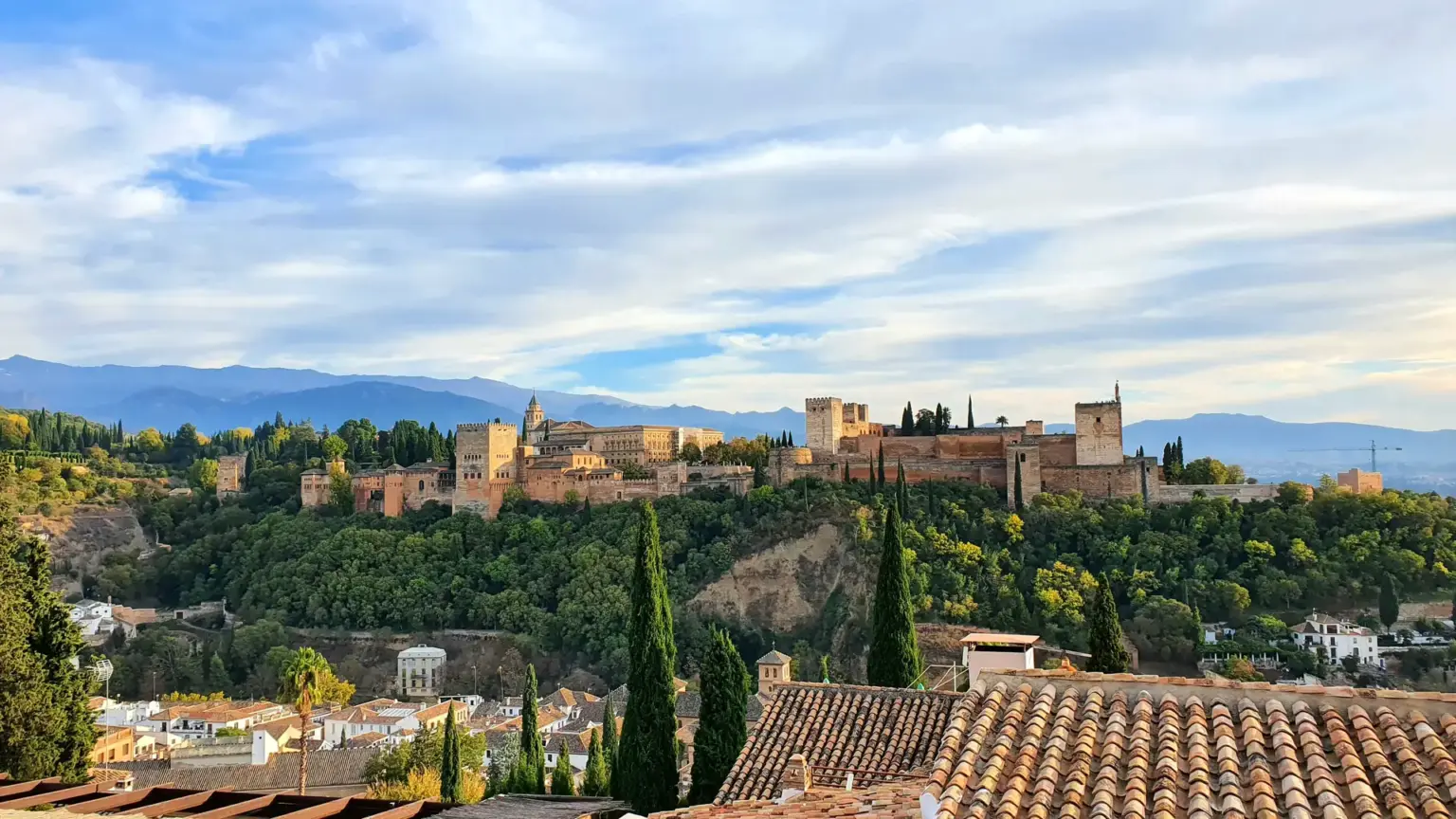
Yes. In 2026 Spain is the most LGBTQ+-friendly country in Europe on paper, and among the easiest anywhere in practice. In May, ILGA-Europe’s Rainbow Map put Spain first of 49 countries, ending Malta’s ten-year run at the top. Same-sex couples have been able to marry here since 2005, and support is broad: in a 2023 Pew survey, 87% of Spaniards said same-sex marriage should be allowed. Spain is also my second love after Italy. I’ve traveled it from north to south, been to Barcelona more times than I can count, and I’m back in Seville this November. At Gay Up Travel I plan tailor-made trips across Madrid, Andalusia, Barcelona and the Catalan coast, built around the places and stays where you can simply be yourselves.
What the law says
Spain moved early, and it hasn’t stopped. Same-sex marriage became legal in July 2005, making Spain the third country in the world to allow it, after the Netherlands and Belgium. Married couples can adopt jointly, and marriages performed abroad are recognized. Since 2022 a comprehensive equal treatment law has protected you against discrimination in work, housing and services, and the criminal code treats sexual orientation and gender identity as aggravating factors in a crime.
Recent years explain the top ranking. In 2023 a new law allowed gender self-determination and depathologized trans identities in healthcare. Spain has since adopted national LGBTI and trans strategies and set up an independent authority for equal treatment. One gap matters to some couples: surrogacy is not legal in Spain for anyone, so male couples who want it go abroad.
What it actually feels like
Here is what the ranking doesn’t tell you. In Spain, two men together are part of ordinary life, not a novelty. You see it at a late dinner in a busy plaza, in a hotel lobby, on a beach promenade on a Sunday. Spaniards live outdoors and late, and nobody is watching who you came with.
I’ll be honest about the other side, because you should hear it from me. A first-place ranking measures laws, not every street. ILGA-Europe says so itself, and Spain’s LGBTI federation reports that assaults rose 15% since 2024, which it links to hate speech in politics. In practice this concerns nights out in some neighborhoods more than travelers’ days. In the cities and coastal towns I send you to, you can hold hands, kiss goodbye at the station and book one bed without a second thought. In a small inland village, people are more traditional. The welcome you receive as a guest doesn’t change; what changes is how much the square notices you.
Madrid: Chueca and one of the biggest Prides in Europe
Madrid is Spain’s capital of gay life. Its heart is Chueca, a central neighborhood that was run-down in the 1980s and became the symbol of a country that changed fast. Today it’s cafés, bookshops, terraces and bars, a few minutes’ walk from the Gran Vía. Neighboring Malasaña and Lavapiés are younger and more alternative.
And Madrid really doesn’t sleep. I’ve found restaurants full at 3 in the morning as if it were 8 in the evening, with a line at the door to get in. If you know where to go, the night here is longer than anywhere else in Europe, and that’s the part of the city I like to plan for our clients.
Madrid Pride, held in early July, is one of the largest in Europe: the city hosted EuroPride in 2007 and WorldPride in 2017. If you prefer the city calm, avoid that week; if you want the party, book early.
Madrid opens our journey through the south: Spain in Full Color, Madrid and Andalusia.
Barcelona and Sitges: the Catalan coast
I’ve been to Barcelona at least five times, and it never repeats itself. The gay life of the city is concentrated in the Eixample, the grid of modernist blocks where the area between Balmes, the Gran Via, Comte d’Urgell and Aragó is known as the “Gaixample”. It’s a district of terraces, cocktail bars and late dinners, a short walk from the Passeig de Gràcia.
Sitges is forty minutes down the coast, and for decades it has been one of the most loved gay destinations in the Mediterranean: a whitewashed old town, a seafront promenade and beaches where couples of every kind lie side by side. Its Carnival, in February or early March, and its Pride in June are the busiest weeks. The rest of the year it’s a quiet seaside town.
The two together make a journey of their own: Barcelona and Sitges, the Catalan Coast.
Andalusia: Seville, Córdoba, Granada and the Costa del Sol
Andalusia is the Spain I know best. I first went in 2013 for Granada and Seville, went back to Granada because I couldn’t stop thinking about it, and in November 2021 drove the region by car: Seville, Córdoba, Granada, Ronda, Málaga and Marbella.

- Seville is the most romantic city in Spain, and an easy one for two men. The most relaxed area for gay life is around the Alameda de Hércules, a long tree-lined square of bars and terraces in the old center.
- Córdoba is quieter and more traditional. Come for the Mezquita and the patios, and spend the evening at a slower pace.
- Granada is where I went back twice: the Alhambra, the white lanes of the Albaicín, and a city with a large student population that keeps it young and open.
- Málaga and the Costa del Sol carry a long history: in 1962 Torremolinos opened what is believed to be Spain’s first gay bar, under the dictatorship, and its Pride today is one of the liveliest on the coast.
Our Madrid and Andalusia journey follows that same road: Madrid, Seville, Ronda and Málaga, Granada, Córdoba.
What we tell our clients before they go
- You do not need to hide. In Madrid, Barcelona, Sitges, Seville and Málaga, two men together draw no attention at all.
- In a small village, read the room. Not because you’re unwelcome, but because a village square notices everyone.
- Live on Spanish time. Dinner at 9:30 or 10 p.m. is normal, nights out start after midnight, and in Madrid you can still sit down to eat at 3 a.m.
- Check the Pride calendar before you book. It decides whether you find a city at a party or at rest: Madrid in early July, Sitges in June, Barcelona around the end of June.
- Book stays that were vetted for you. For me, a verified welcome is the first filter, before view or price.
- Spring and autumn are Spain at its best. April to June and September to November bring mild days, and Andalusia in summer is hot.
FAQs
Is Spain safe for gay travelers?
Yes. Spain ranks first of 49 countries in ILGA-Europe’s 2026 Rainbow Map, same-sex marriage has been legal since 2005, and in Madrid, Barcelona, Sitges and Andalusia’s cities couples are part of ordinary life. Small villages are more traditional, so discretion there is sensible.
Is same-sex marriage legal in Spain?
Yes. Spain legalized same-sex marriage in July 2005, the third country in the world to do so. Married couples can adopt jointly, and marriages performed abroad are recognized.
Where is the gay area in Madrid?
Chueca, in the city center near the Gran Vía, is Madrid’s gay neighborhood. Malasaña and Lavapiés nearby are younger and more alternative.
Is Barcelona or Madrid better for gay travelers?
Both are excellent. Madrid has the bigger scene and the larger Pride; Barcelona adds the sea, modernist architecture, and Sitges forty minutes away. Many of our clients combine one of them with Andalusia.
Is Andalusia gay friendly?
Yes. Seville, Málaga and Granada are open and relaxed, and Torremolinos on the Costa del Sol has a long gay history. Villages in the interior are more traditional.
If you’re imagining Spain as a couple, Madrid and the south, or Barcelona and the sea, tell me what you have in mind and I’ll shape it around you. I read every message myself. — Francesco