
Where to stay in Malta as a gay couple (Valletta or Sliema?)
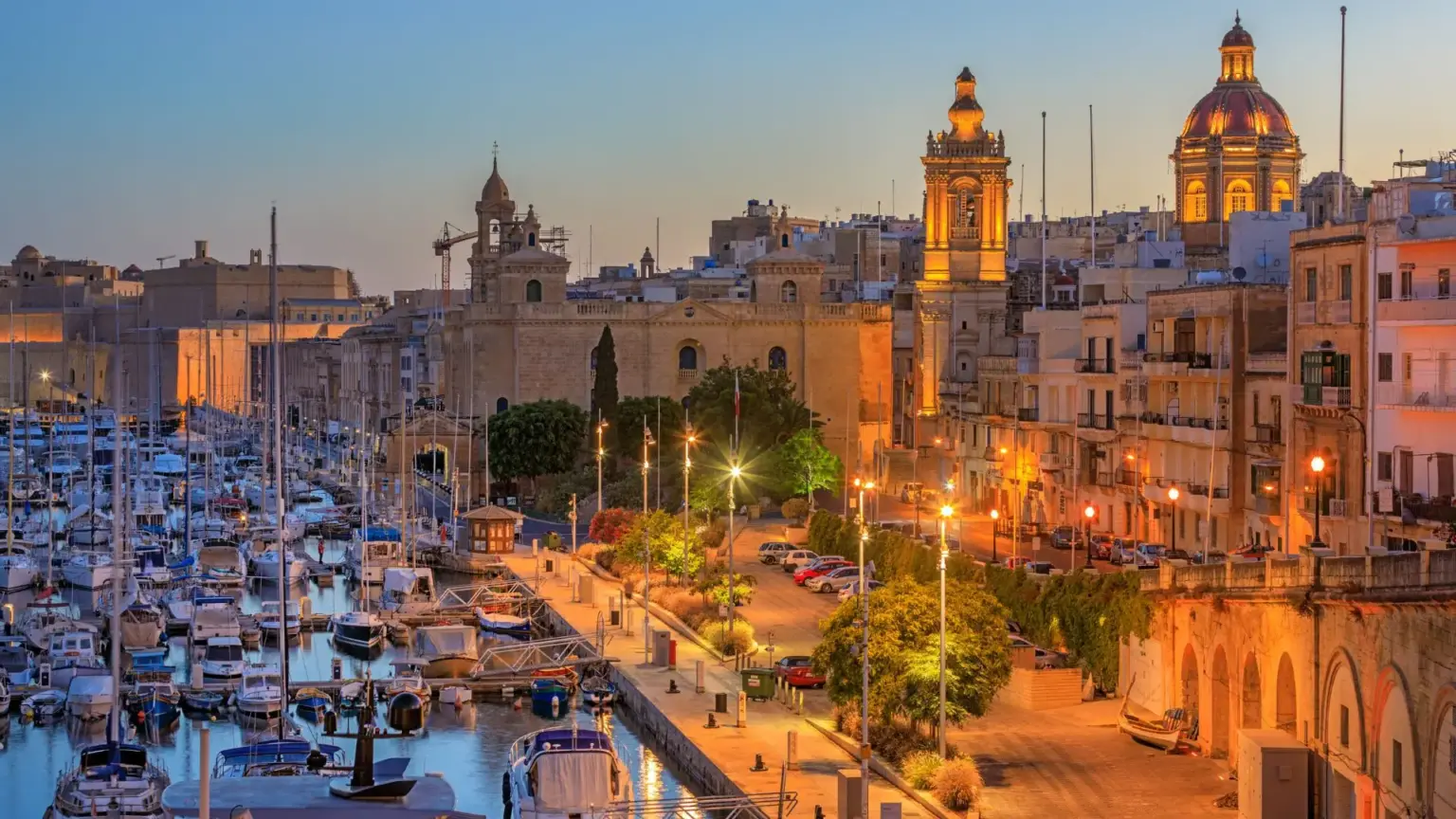
For almost every couple I plan for, the answer is Valletta. Malta’s capital is small enough to walk across in twenty minutes and dense enough that you keep not crossing it, and it is where the island makes the most sense after dark. Sliema and St Julian’s answer a different brief — seafront, bigger hotels, a later night — and Gozo is the slower second act if you have the days. Malta is one of the most welcoming countries in Europe for gay travelers, so the choice here is about the trip you want, not about comfort. At Gay Up Travel I build tailor-made Malta trips around a base I’ve slept in myself.
Valletta — for couples who want to live inside the city
Valletta is a walled capital built in a single moment, in the sixteenth century, by the Knights of Malta, on a street plan that has never really been undone. You walk through City Gate and the noise drops: narrow uphill streets, honey-colored limestone, and the enclosed wooden balconies — bottle green, brick red, midnight blue — that make the city look like nowhere else in the Mediterranean.
The reason to sleep here rather than visit is the evening. Once the day-trippers go back to their resorts, Valletta becomes an almost intimate place: restaurants fill slowly, the squares belong to locals, and you can walk without a destination. The Three Cities are a few minutes across the Grand Harbour by traditional boat, Sliema is a short ferry ride the other way, and Mdina is about twenty minutes by road. I spent four days here with no car, everything on foot.

What to know before you choose it: the streets are stone and steep, so bring shoes with a firm sole, and there is no beach in the city — the sea comes to you as a view, a harbor crossing or a rooftop pool. The stays worth booking are small historic houses rather than big hotels, and the good ones go early in spring and September. Two men sharing a table in Valletta is entirely unremarkable; the capital is one of the two centers of LGBTQ+ life on the island.
Sliema and St Julian’s — for the sea, the promenade and a later night
Sliema sits across Marsamxett Harbour from Valletta, and the public ferry between them takes about five minutes, running every 20 to 30 minutes in season. It is modern, busy and built along a long seafront promenade, with rocky platforms for swimming and larger hotels and apartments than Valletta can offer. Next door, St Julian’s and Paceville are where Malta’s nightlife concentrates, with gay-friendly bars and clubs and music until late — the crowd skews young.
I’ll be honest about why I don’t build GUT trips here. Sliema is convenient and the water is right there, but it is a seafront resort, and seafront resorts are not where you understand Malta — the traffic, the new construction and the missing old-town evening are the trade-off for the promenade. If the brief is a sea-and-pool holiday with the occasional night out, it is a reasonable choice. If you want the island itself, stay in Valletta and take the ferry to Sliema for an afternoon, not the other way around.
Gozo — for slower days
Gozo, Malta’s sister island, is greener, slower and less cosmopolitan — at moments it feels like a different country. The Citadel in Victoria is worth the journey on its own. It takes a commitment, though: the ferry leaves from Ċirkewwa, at Malta’s northern tip, and between the drive and the crossing, seeing Gozo properly means at least a full day. With three or four days in Malta, I keep it as an option and decide on the ground; with more, it earns its place.
How I choose for our clients
My first question is never about the neighborhoods — it’s about how you want your evenings to feel. Want to walk out of the door into a lived-in capital? Valletta. Want a swim before breakfast and a late night out? Sliema or St Julian’s, with Valletta as a day trip. Three nights in Valletta is the minimum to feel the city; four or five let you add Gozo, Mdina and a Sunday morning at the Marsaxlokk fish market without rushing.
Wherever you land, the property matters more than the postcard. Our Valletta base is a small property we’ve stayed in ourselves, chosen because the welcome there is a given and not a hope. For the full picture of how I build Malta, read our Malta Special; for one way the days come together, see this Malta itinerary. And if your first question is about comfort rather than basing, start with is Malta gay friendly?
FAQs
Is Valletta or Sliema better for a gay couple?
Valletta, for most couples. It is walkable, historic and at its best in the evening, and it is one of the two centers of LGBTQ+ life in Malta. Sliema suits a seafront, pool-and-promenade holiday, with Valletta five minutes away by ferry.
Where is the gay area in Malta?
Valletta and St Julian’s are the centers of LGBTQ+ life. St Julian’s and Paceville have the gay-friendly bars and clubs and the later nights; Valletta is quieter, and couples are welcome everywhere in the cities.
How many nights do you need in Malta?
Three nights in Valletta is the minimum to feel the city. Four or five nights let you add Gozo, Mdina and the Marsaxlokk fish market without rushing.
If you’re weighing Valletta, the coast or a few days on Gozo, tell me your dates and how you like to spend your evenings, and I’ll tell you exactly where to base and why. I read every message myself. — Francesco