
The Puglia I Come Home To
I am Pugliese. Puglia is the heel of Italy’s boot — the long, sun-struck region that runs down the Adriatic — and it is the place I’m from. I know it the way you only know somewhere you have actually lived: not from research, but from the inside, in every season and at every hour.
That is the whole reason I wanted Puglia to have its own entry in this Journal. When I plan a trip here for someone, I’m not assembling it from a map and a handful of good reviews. I’m handing you the region I come from, arranged the way I’d arrange it for a friend coming to stay near me — where to go, when, and, the part that matters most, why there and not next door.
It also happens to photograph embarrassingly well. But that’s not why I can vouch for it. I can vouch for it because it’s home. So let me take you through it the way I actually would.
A valley full of little stone houses
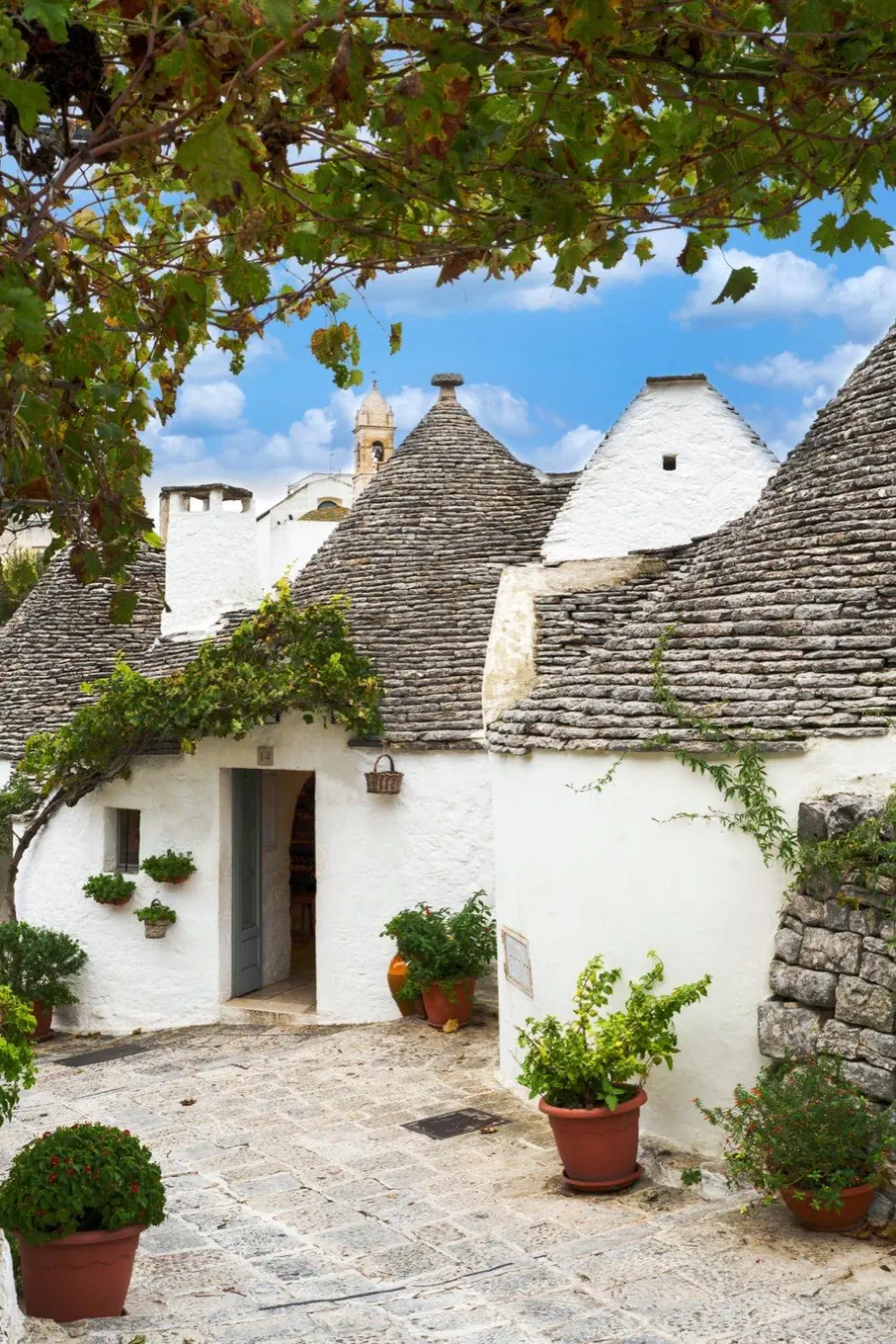
Start inland, in the Valle d’Itria — the green pocket of countryside between Bari and the Salento, and the part of Puglia most people fall hardest for.
This is trulli country: those small, round, dry-stone houses with the conical grey roofs, some of them centuries old, scattered across the fields like something out of a fable. Alberobello has so many of them, packed into whole neighborhoods, that UNESCO put it on the World Heritage list in 1996. It’s the famous one, and it’s worth seeing — early, before the buses arrive.
But I’ll be honest with you the way I’d be honest with a friend: the real life of the valley is in the towns around it. Locorotondo — the name means “round place” — is a circle of whitewashed houses on a hilltop, with some of the best views over the whole valley and a crisp white wine that carries the town’s own name. Martina Franca is all elegant Baroque stone and shaded piazzas, grander and slower, the kind of place you sink into for a whole afternoon. None of them ask anything of you except that you slow down — and slowing down is the single most useful thing a traveler can do here.
The cathedral underground
Near where I live there is a thing I send everyone to, and it still gives me a small thrill every time: the Grotte di Castellana, the most spectacular cave system in Italy.
You descend out of the heat into a world of caverns that runs for kilometers underground — vast chambers, pale forests of stalactites, and at the far end a chamber so white and luminous it is called the Grotta Bianca, the White Cave. It is genuinely one of the most beautiful natural sights in the country, and most foreign visitors to Puglia never hear about it, because it sits a little off the main tourist line. That is exactly the kind of thing knowing a place lets me hand you — not the sight everyone already has on their list, but the one they’ll spend the rest of the trip telling people about.
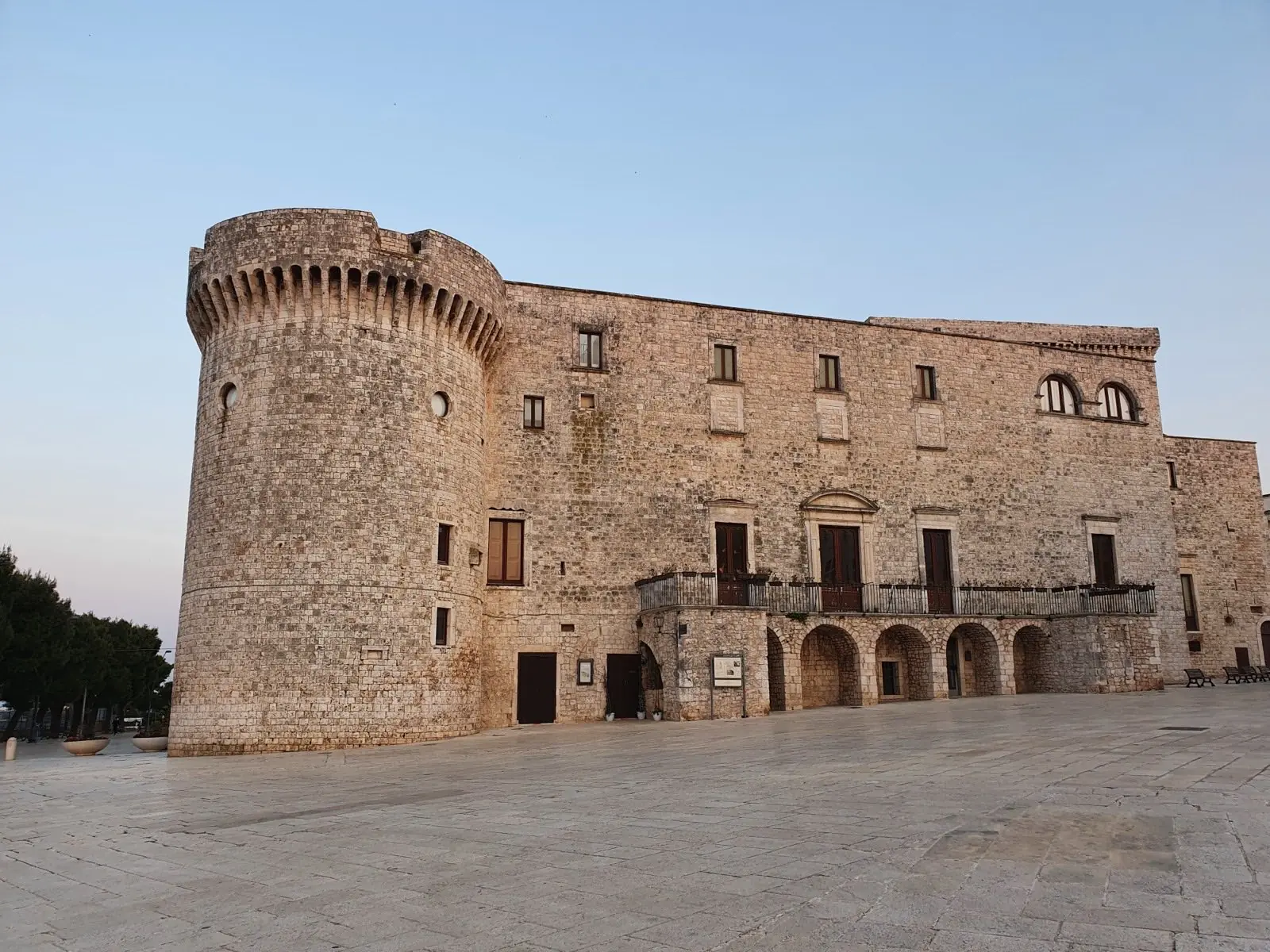
A short drive from there is another of those: Conversano, a hill town crowned by a fairy-tale Norman castle, with a quiet, lived-in old center most foreign visitors never put on their list. No crowds, no performance — just a real Puglian town getting on with its day. It’s the sort of detour you only take when someone who knows the area tells you to.
Where the land meets the sea
Then there is the coast, and this stretch of the Adriatic is one of the loveliest in Italy.
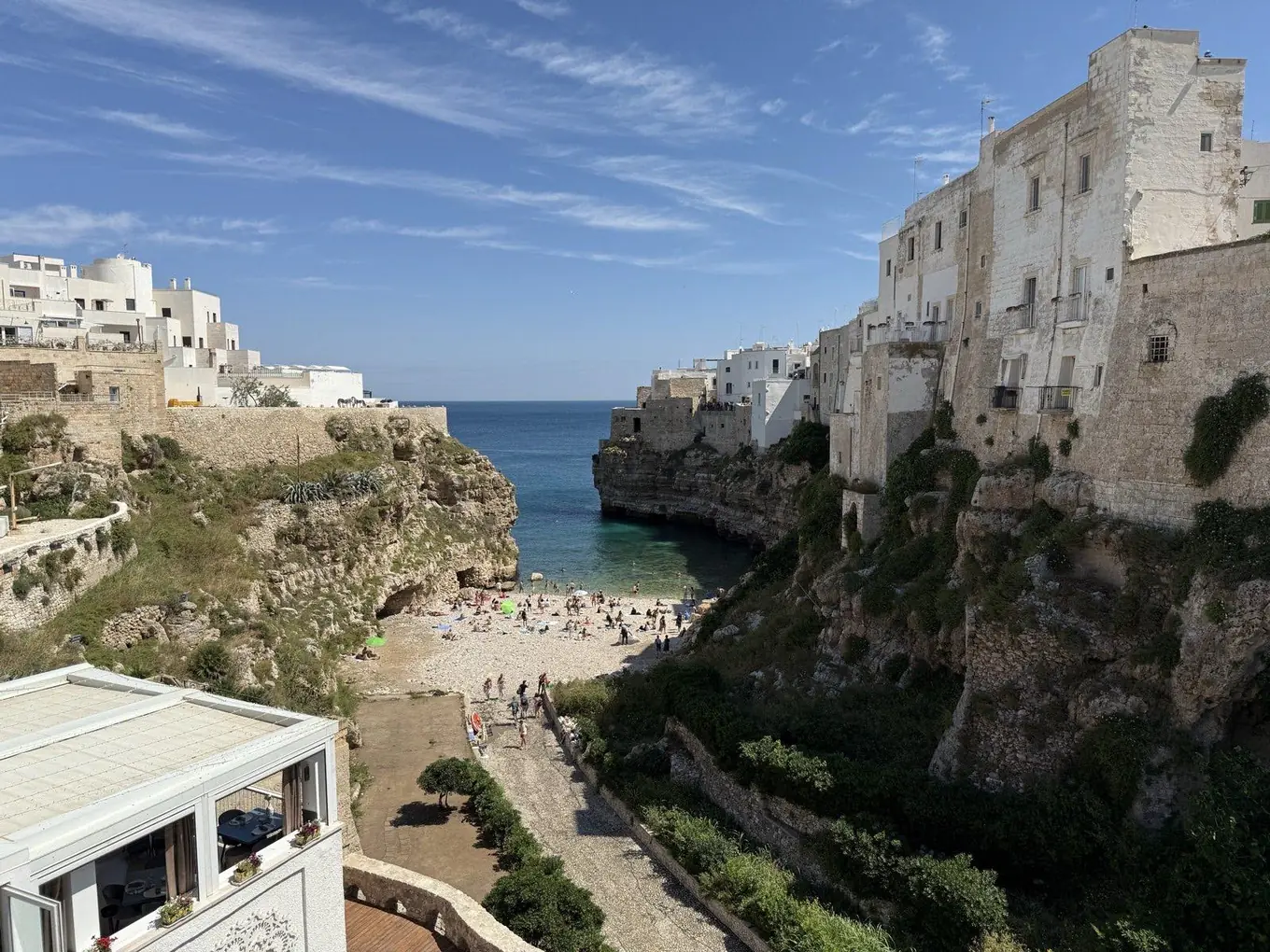
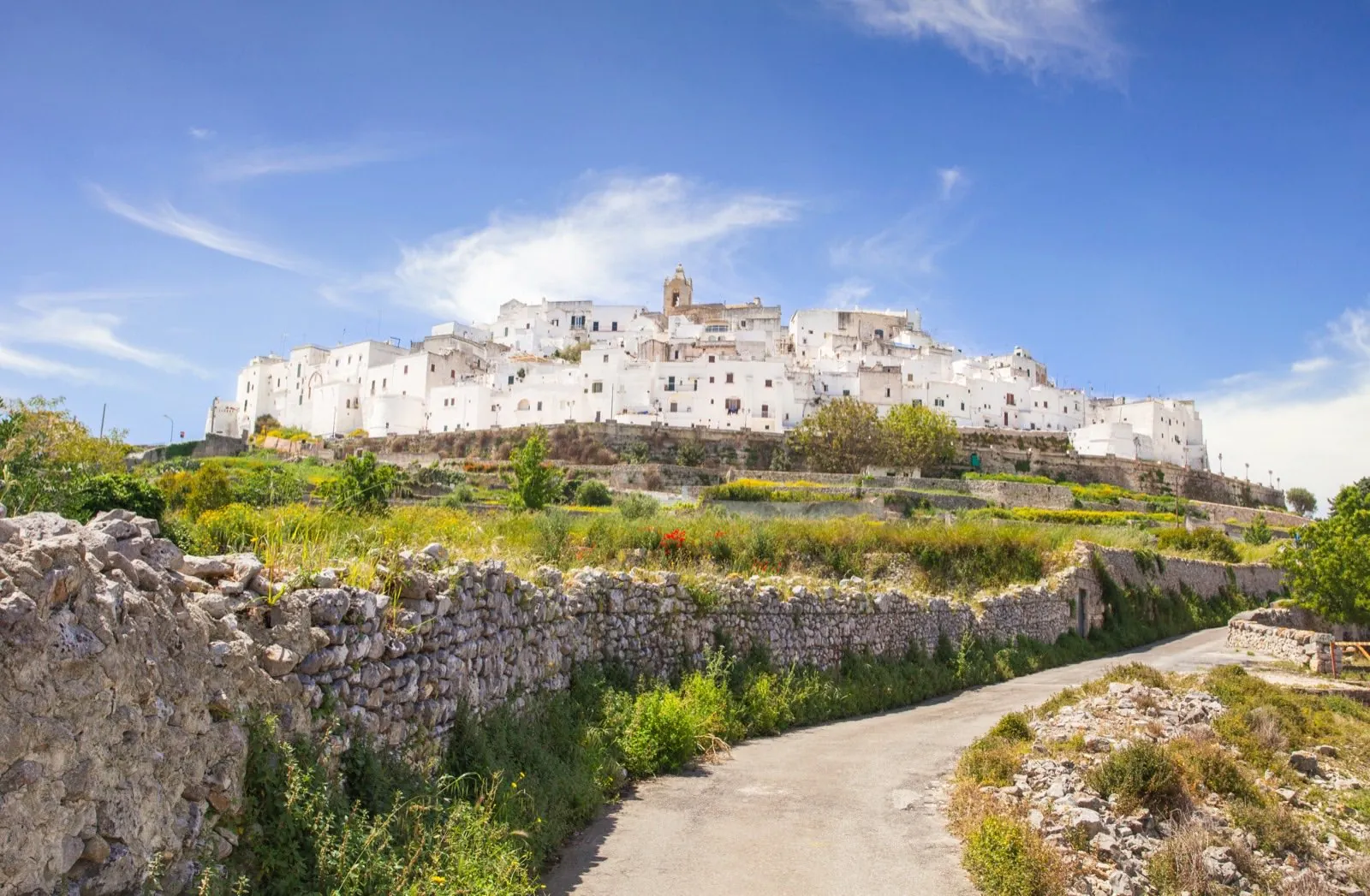
Just inland but in sight of the sea, Ostuni rises off the plain like something drawn from memory — a tumble of lime-washed houses on a hill above the olive groves, the Città Bianca, the White City. Down on the water, Polignano a Mare sits on cliffs straight above the sea, its old town hanging over a small beach wedged between the rocks — the image that probably brought Puglia onto your radar in the first place, and for once it doesn’t oversell. A little further along, Monopoli is the one I send people to when they want the same beauty with fewer cameras: a working port town with a golden old center and a harbor full of small painted boats. And near Fasano, Savelletri — once a modest fishing hamlet — has quietly become one of the most chic stretches of coast in the south, the address for travelers who want the sea, the light, and a certain hush. Knowing which of these fits which traveler is half of what I do.
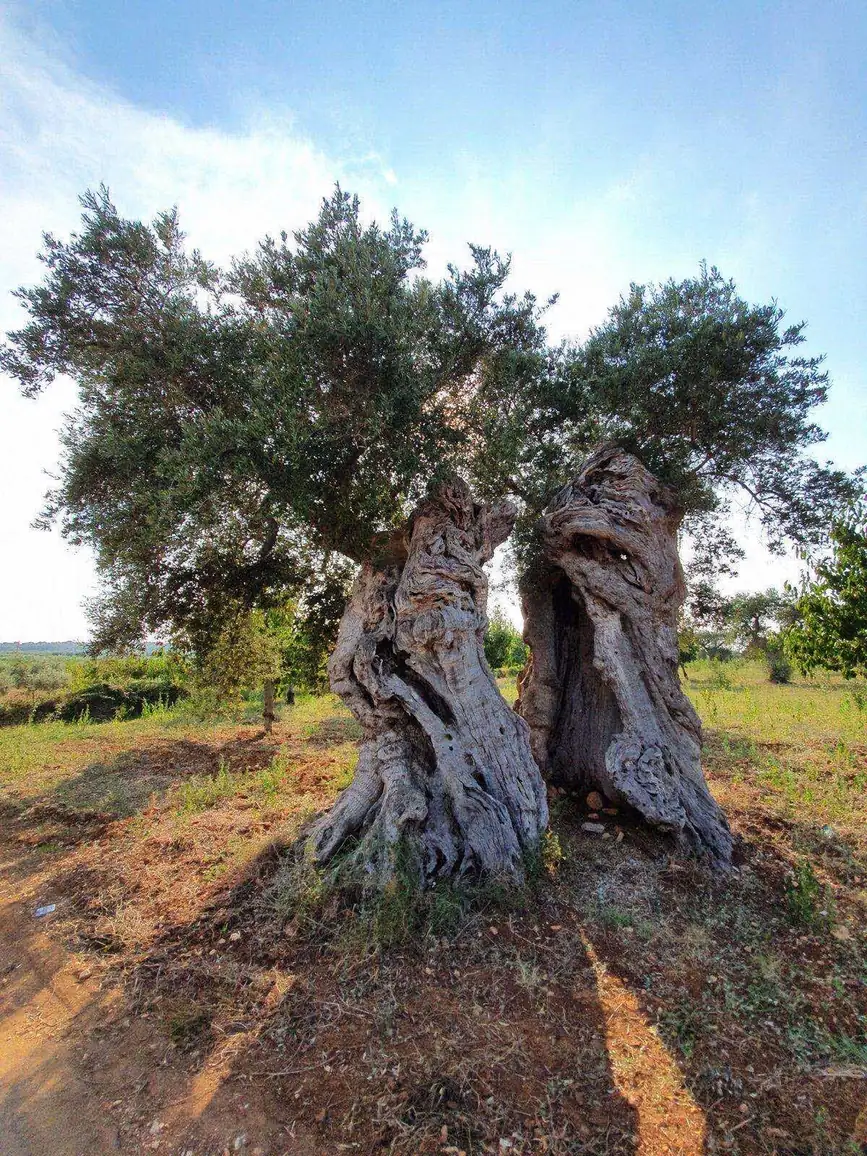
What the images don’t tell you is the olive trees. Puglia is covered in them — groves of them, some of the trees a thousand years old, gnarled into shapes that look almost deliberate. The oil that comes off this land is, quietly, some of the best in the world. You will taste the difference at the first meal, and you will keep tasting it, and at some point you will start planning how to get a bottle home.
The table is the point
Which brings me to the part of Puglia I’d defend most fiercely: the food, and the way it is eaten.
This is a region that feeds you like it has something to prove and nothing to sell. The pasta is made by hand — the little ear-shaped orecchiette you’ll still see women rolling on tables in the old towns. The vegetables taste like they were picked that morning, because they were. The seafood on the coast is pulled in and served the same day, often barely touched by the kitchen because it doesn’t need to be. And the wine — the deep reds of the south, the surprising whites — is poured generously and priced like a kindness.
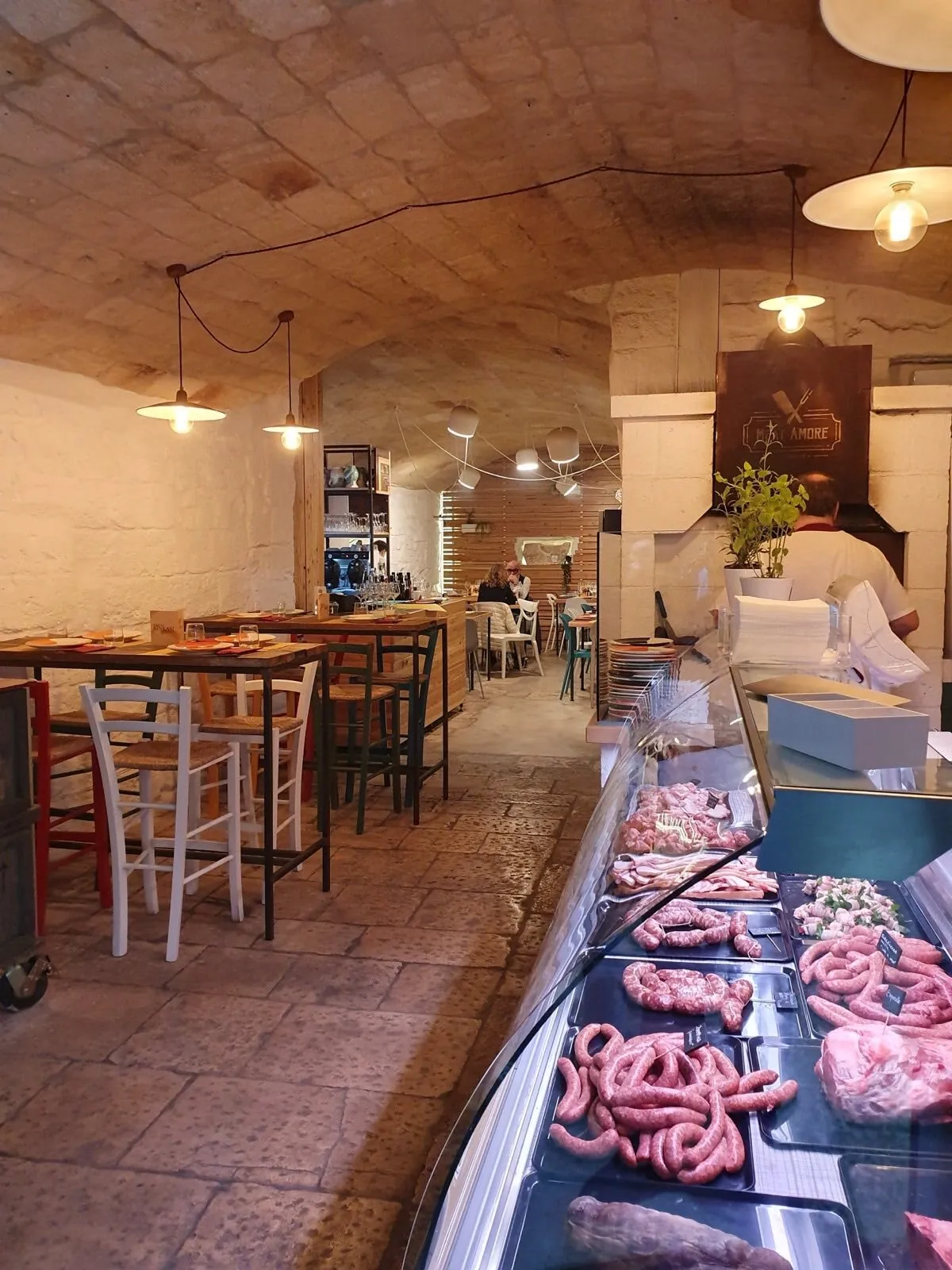
There’s one tradition here that is pure home for me: the fornello pronto. In the towns of the Valle d’Itria and the hills of the south-east of Bari, the butcher is also the grill. You walk into a macelleria, choose your cuts straight from the counter — above all the bombette, little rolls of pork wrapped around cheese — and they cook them for you on the spot, over coals, while you wait. Then you sit and eat them right there, paper on the table, a glass of the local red in hand. It isn’t refined and it isn’t trying to be. It’s one of the most genuinely Puglian things you can do, and it belongs to my own corner of the region.
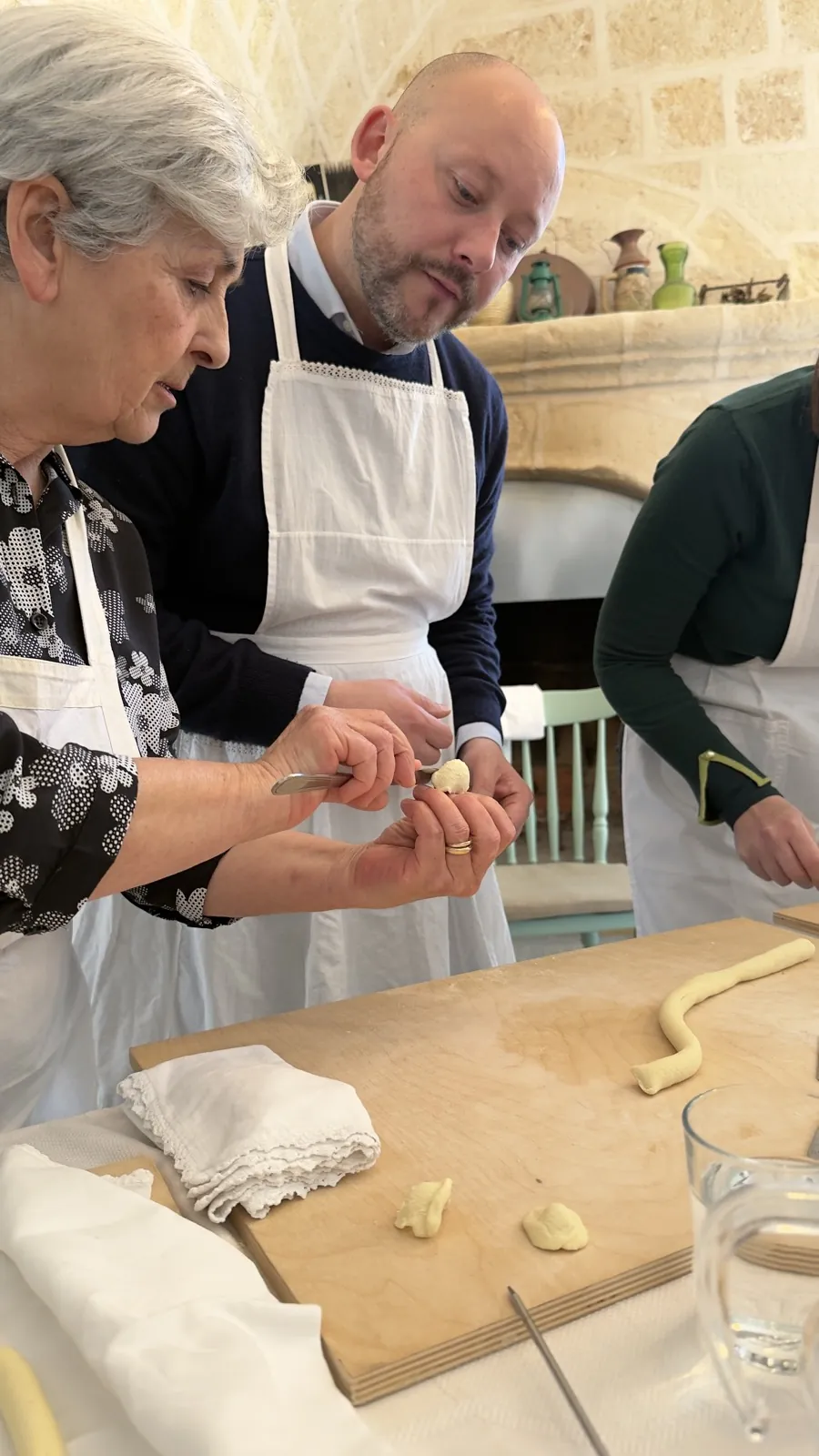
I work with a few families here who cook the way their grandmothers did, and the meals I arrange around their tables are, every single time, the thing my clients remember longest. Not a restaurant with a view. A table where someone is glad you came. That distinction is the whole of what I do.
Travel as you are — even here
Let me say plainly the part I can only offer because I’m from here. Puglia is the deep south of Italy — warm, traditional, family-centered, Catholic in its bones. It is not a place built around gay nightlife, and I’d never sell it to you as one. What it offers is something I value more than a scene: an easy, genuine welcome. Two men sharing a table, a room, a life — met with the same unhurried warmth Puglia extends to anyone who sits down hungry and curious. The hospitality here is old and deep, and it doesn’t come with conditions.
That welcome is the part I can promise because I live inside it. Knowing the places that get it right — and quietly leaving out the ones that don’t — is simply part of how I build a trip here. When it works, you never notice it happened. You just have a wonderful time.
That is what I mean by travel as you are. Not finding the one corner of a place that tolerates you, but being handed the whole of a place by someone who already made sure it would hold you.
Puglia holds you. I’d know. I never left.
About the author
Francesco Mevoli is the founder of Gay Up Travel, a boutique travel agency he started in 2021. Italian and based in Puglia, he designs tailor-made trips for gay men who want to see the world as themselves — choosing every destination, hotel, and local partner personally. Gay Up Travel is a member of IGLTA. New entries in the GUT Journal are published every few weeks. And if reading this has started a trip taking shape in your head, that is where my work begins: plan your trip with me.