
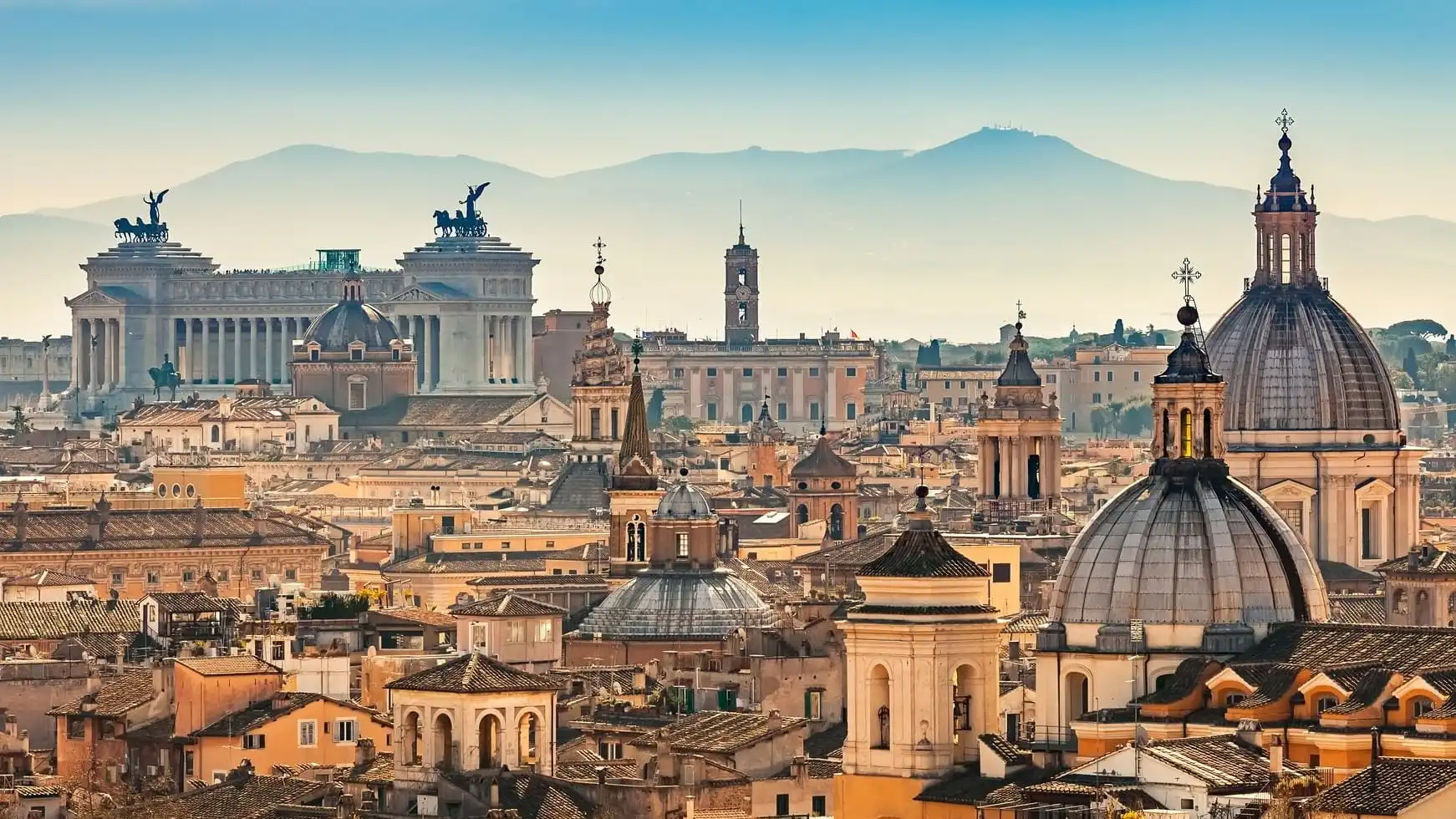
Rome, Tuscany & Venice
Why Rome, Tuscany and Venice
I work with Rome, Florence and Venice because, taken together and in this order, they are the Italy most people want the first time — and because most people get them wrong: two nights each, a different hotel every other day, and a train schedule instead of a trip. The route is three nights in Rome, four in Florence and two in Venice, in three houses I know, with fast trains for the long legs and a private driver for the Tuscan hills.
Rome is the city for a first visit: ancient and lived-in at the same time, with Trastevere and Monti where dinner runs late and nobody is watching. In Florence you stay in a palazzo on a residential square, a few minutes from the Duomo, and use the city as the base for a day in the hills and a day in Lucca. And Venice is its own thing: best early, best from the water, best from a palazzo on the Grand Canal where the staff has known its regulars for twenty years. If Tuscany is the part you want more of, there is also eight nights in Florence and the Tuscan hills as a trip of its own.
When to go
April–June · September–October
Christmas on request, cities only
Length
10 days, 9 nights
Rome 3 · Florence 4 · Venice 2
Price
From $10,000 pp
9 nights · two sharing · flights not included
Includes every stay, first-class train tickets between the cities, a private driver for the day in the hills, private guides where it matters, and all the experiences listed. International flights excluded. How it works
The trip in a nutshell
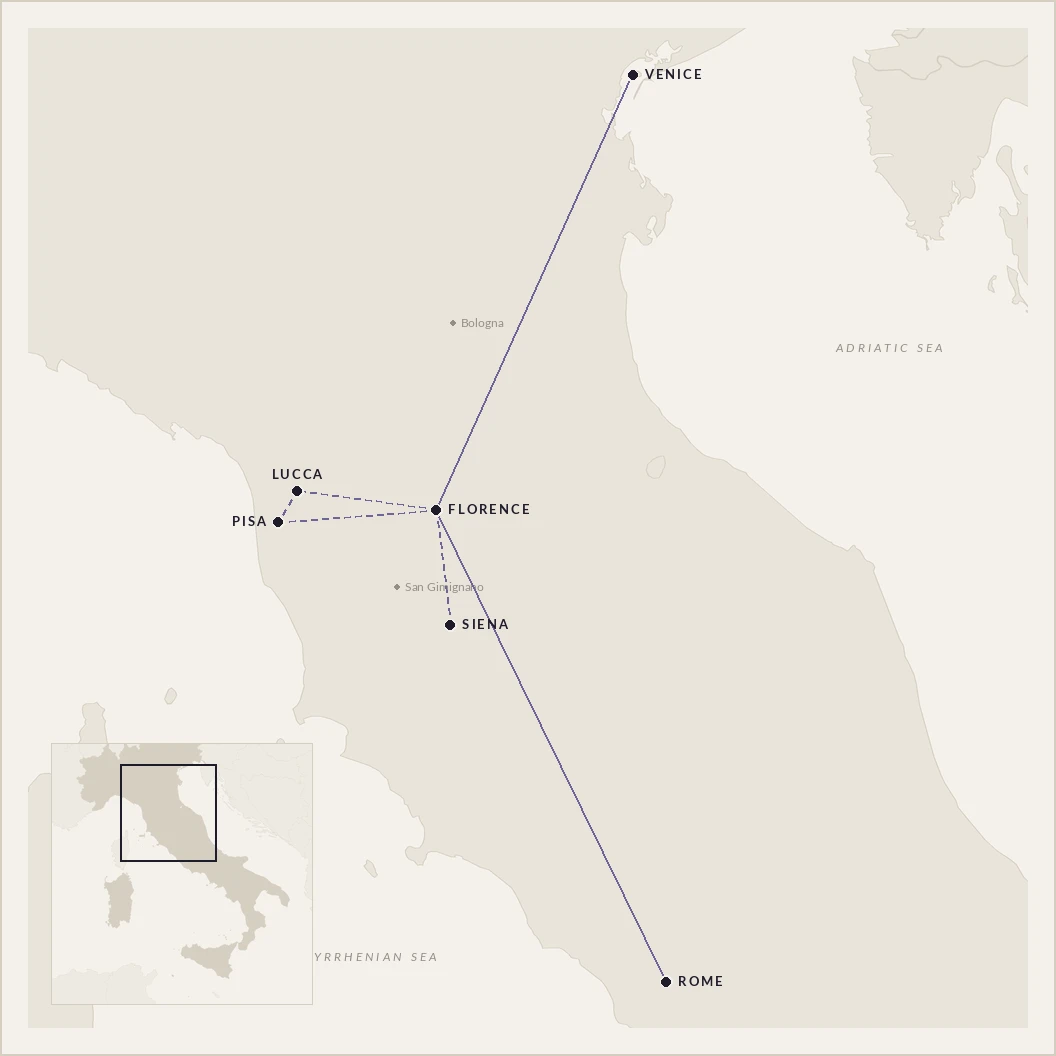
Three cities, three hotels, nine nights, and every move between them in under two hours by high-speed train — with a driver waiting at each station, so you never touch your bags on a platform. You land in Rome and spend three nights there: the ancient city and the Vatican with a private guide, and the neighborhoods on your own, which is how Rome is meant to be seen.
Then Florence for four nights, in a nineteenth-century palazzo on a quiet square: the museums done right, the Oltrarno workshops, a day in the hills with a family winery, and a day in Lucca. And Venice last, for two nights on the Grand Canal, arriving by water taxi and leaving the same way. Italy in full, at the pace it deserves.
Who this is for
This is for the traveler on a first trip to Italy who wants the essentials done properly — the right hotel in the right square, a guide who makes the Forum make sense, a table that is not on any list — and who does not want to spend the trip changing hotels. It also works for the one who has been before, with a group or in a rush, and wants to do it again the way it should have been done.
It is a trip where being a gay couple is not something to plan around: in the parts of these three cities where you’ll spend your days, it simply is not a topic. Away from them, I’ll tell you where to read the room, and the places I send you to are places where I have sat at the table myself. If you want the honest version before you book, read is Italy gay friendly?
The route
A starting point, not a fixed menu: every day is shaped around you. Here is how I would do it the first time.
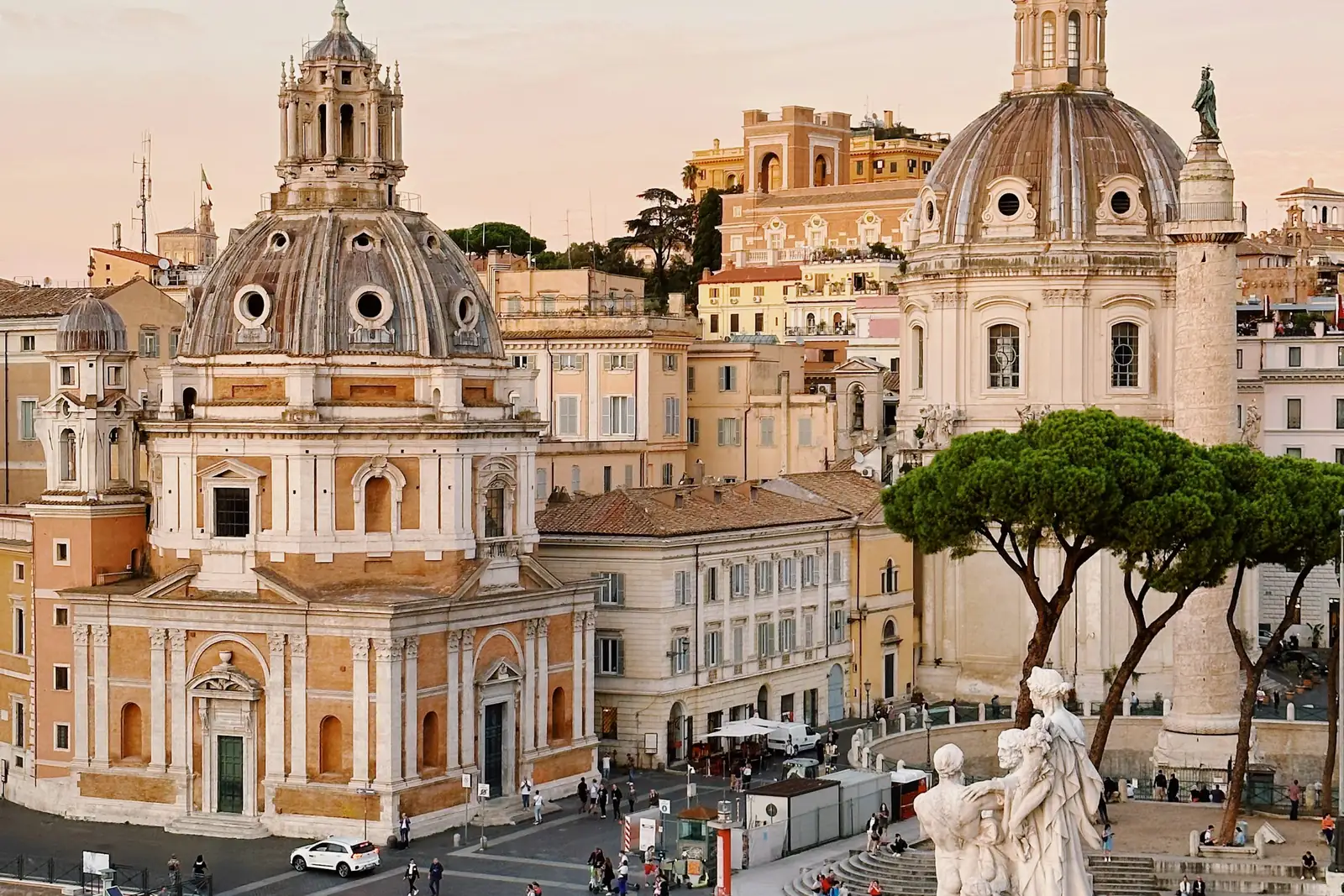
Days 1–3
Rome
Day 1. A driver meets you at Fiumicino and takes you to a small hotel a few steps from the Trevi Fountain. Nothing planned for the afternoon but a walk, and dinner in a trattoria in Monti that I have been going to for years. The first day of a trip to Italy is for arriving.
Day 2. Ancient Rome in the morning with a private guide who is an archaeologist, not a script: the Forum, the Palatine, the Colosseum with early access, before the heat and the crowds. The afternoon is free — Campo de’ Fiori, the Pantheon, a long coffee. Dinner in Trastevere, where the evening runs late.
Day 3. The Vatican Museums before opening, with a private guide, ending in the Sistine Chapel while it is still quiet. Then the Rome nobody sends you to: the Jewish quarter and its kitchens, the Aventine and its keyhole, an aperitivo on a terrace at the hour the city turns gold.
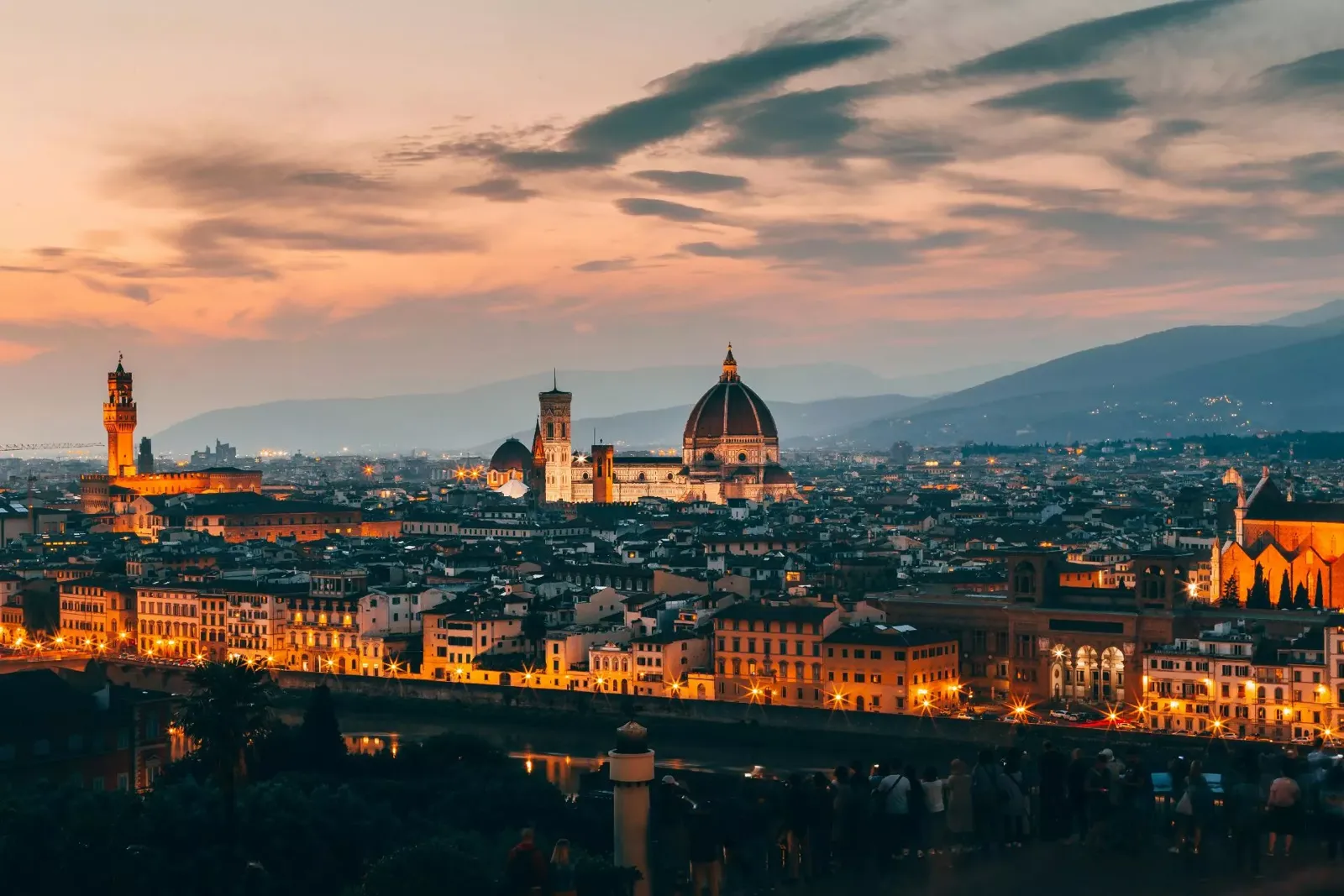
Days 4–7
Florence, and the hills around it
Day 4. A driver to Termini, a Frecciarossa, and you are in Florence an hour and a half later. You check in at Palazzo Castri, a nineteenth-century palace on Piazza dell’Indipendenza, seven minutes from the Duomo and in a different Florence: a square that has kept its residential life. The evening is for the Oltrarno, across the river, and a Tuscan dinner.
Day 5. The Uffizi or the Accademia with a private guide and timed entry, done in two hours instead of five, then the artisan workshops of the Oltrarno, where people have worked the same bench for forty years. Sunset from San Miniato, above the city.
Day 6. A private driver for a day in the hills: San Gimignano early, before the day-trippers, and lunch at a family wine estate above Siena — a short cellar visit, then their table. Siena itself in the afternoon, if you want it; back to Florence for the evening.
Day 7. Lucca by car or by train, an hour and a quarter: a city still entirely inside its walls, now a promenade you walk in an unhurried hour, and a food walk through the center. Pisa on the way back, for the Camposanto first — the quietest half hour on the square — and then the tower. Your last Florentine dinner.
Days 8–10
Venice
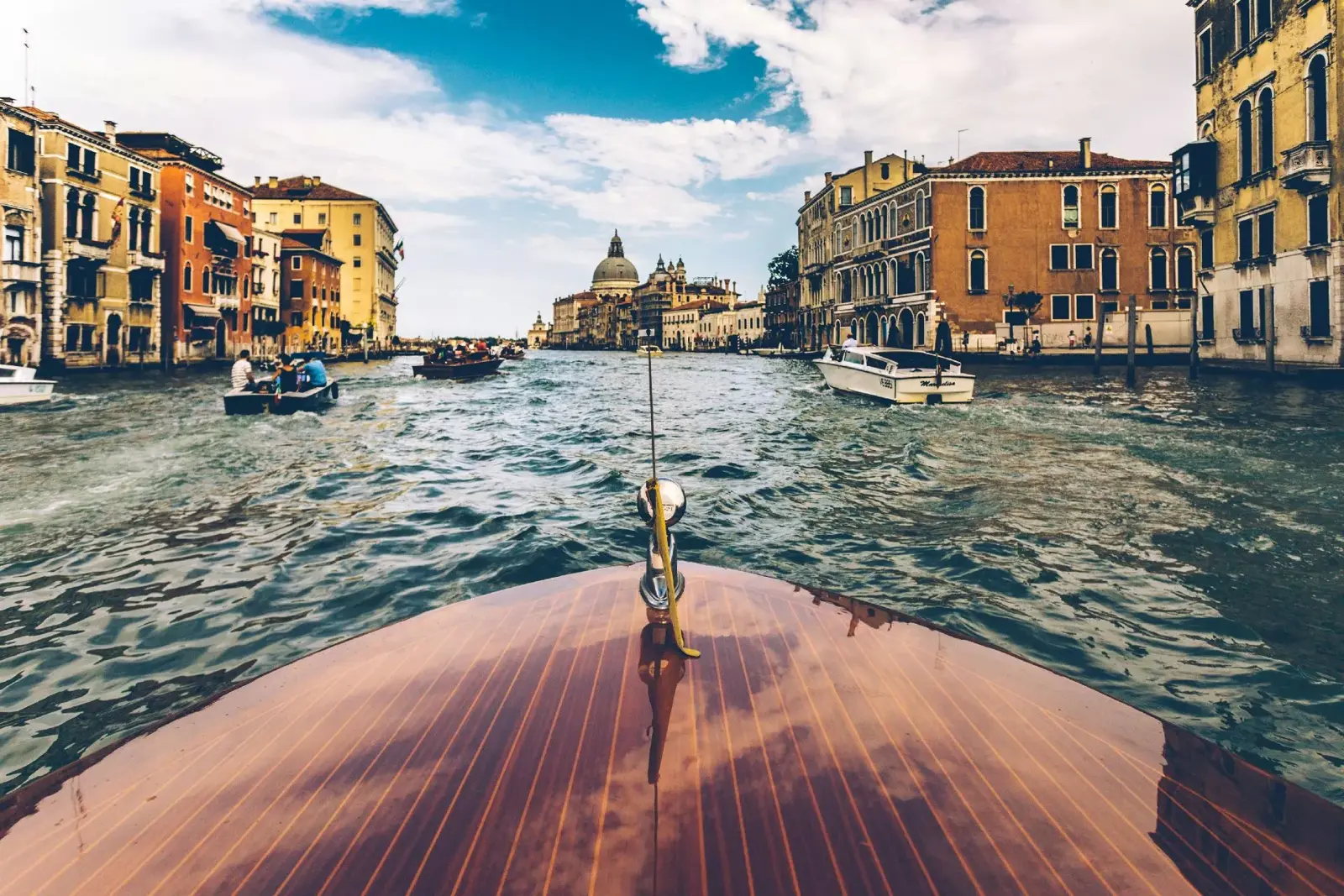
Day 8. Two hours by train, and then the only arrival that matters in Venice: a water taxi from the station up the Grand Canal to Ca’ Sagredo, a fifteenth-century palazzo with its own landing. In the afternoon a private walk through San Marco and the Doge’s Palace, and in the evening a bacaro crawl — cicchetti and a glass of wine standing up, the way Venetians eat.
Day 9. Into the lagoon by private boat: Murano for a furnace that still works for the trade and not for the tour groups, Burano for the colors and a fish lunch. Back in Venice, the afternoon is yours: the Accademia, the Peggy Guggenheim, or a long walk with no destination, which is the best thing you can do here.
Day 10. A water taxi straight to Marco Polo airport, forty minutes across the lagoon. If Venice has done what it usually does, a third night goes in.
Where you stay
Three stays, two changes of hotel, chosen for character, position and quiet.
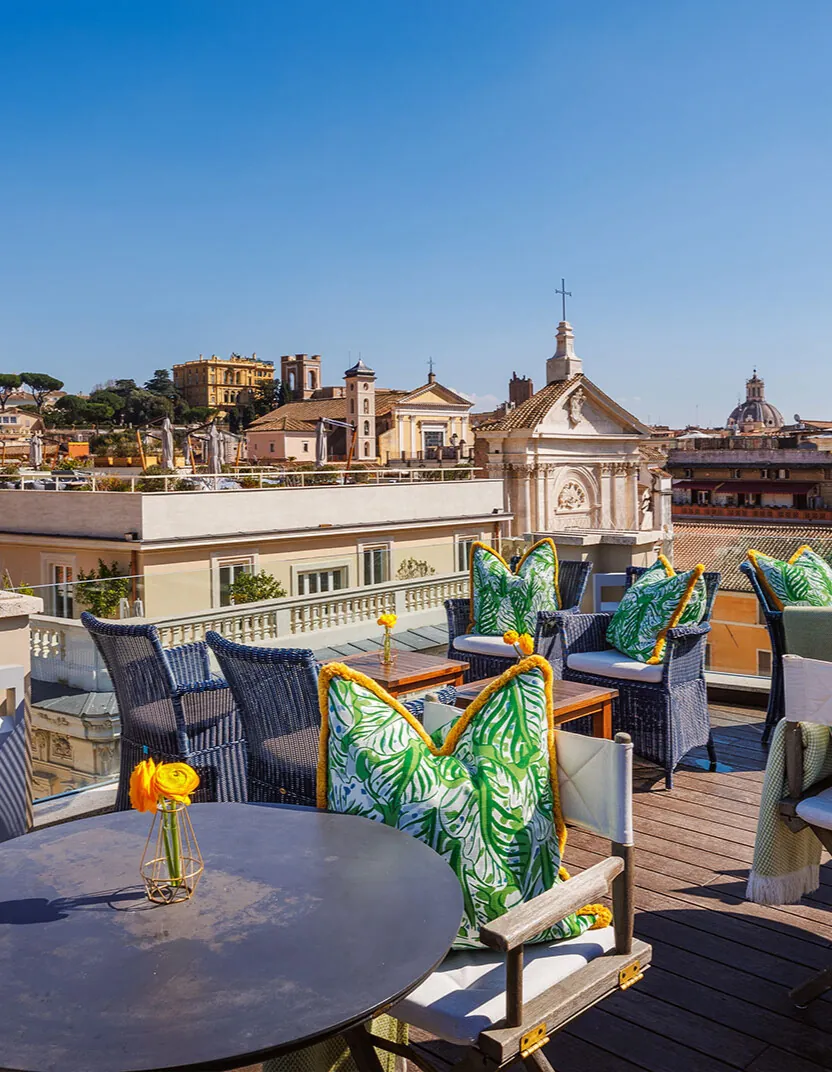
Hotel Singer Palace, Rome
A small hotel a few steps from the Trevi Fountain and Via del Corso: calm, well placed for a city you will do on foot, with a rooftop for the evening aperitivo over the domes.

Palazzo Castri 1874, Florence
A nineteenth-century palace on Piazza dell’Indipendenza, about seven minutes on foot from the Duomo but in a different Florence: a square that has kept its residential life. Breakfast is in La Limonaia, the old orangerie, with the garden outside.

Ca’ Sagredo, Venice
A fifteenth-century palazzo directly on the Grand Canal, with frescoed halls, its own water landing and a staff that has known its regulars for decades. You arrive by water taxi, which is the only way to arrive here.
Every property here is one I have stayed in or walked through myself, or one vetted by the local team I have worked with for years.
Before you arrive
Everyone you’ll meet on this trip knows who’s coming. The hotel has been told two men are checking in and the front desk briefed: one bed, no questions. The driver knows you’re a couple before you get in the car. The guides are chosen one by one and told the same. The restaurants are booked with the kitchen in the loop if there’s something to celebrate. I’ve been on the other side of every one of those moments myself; anyone who stiffens at the request doesn’t work with me. Traveling solo or with friends? Same people, same welcome.
In their words
Every detail was beyond incredible, from the wonderful hotel selections and personalized, guide-led excursions to the seamless public and private transportation.
RON · SAN FRANCISCO
Athens & the Greek islands
More Italy
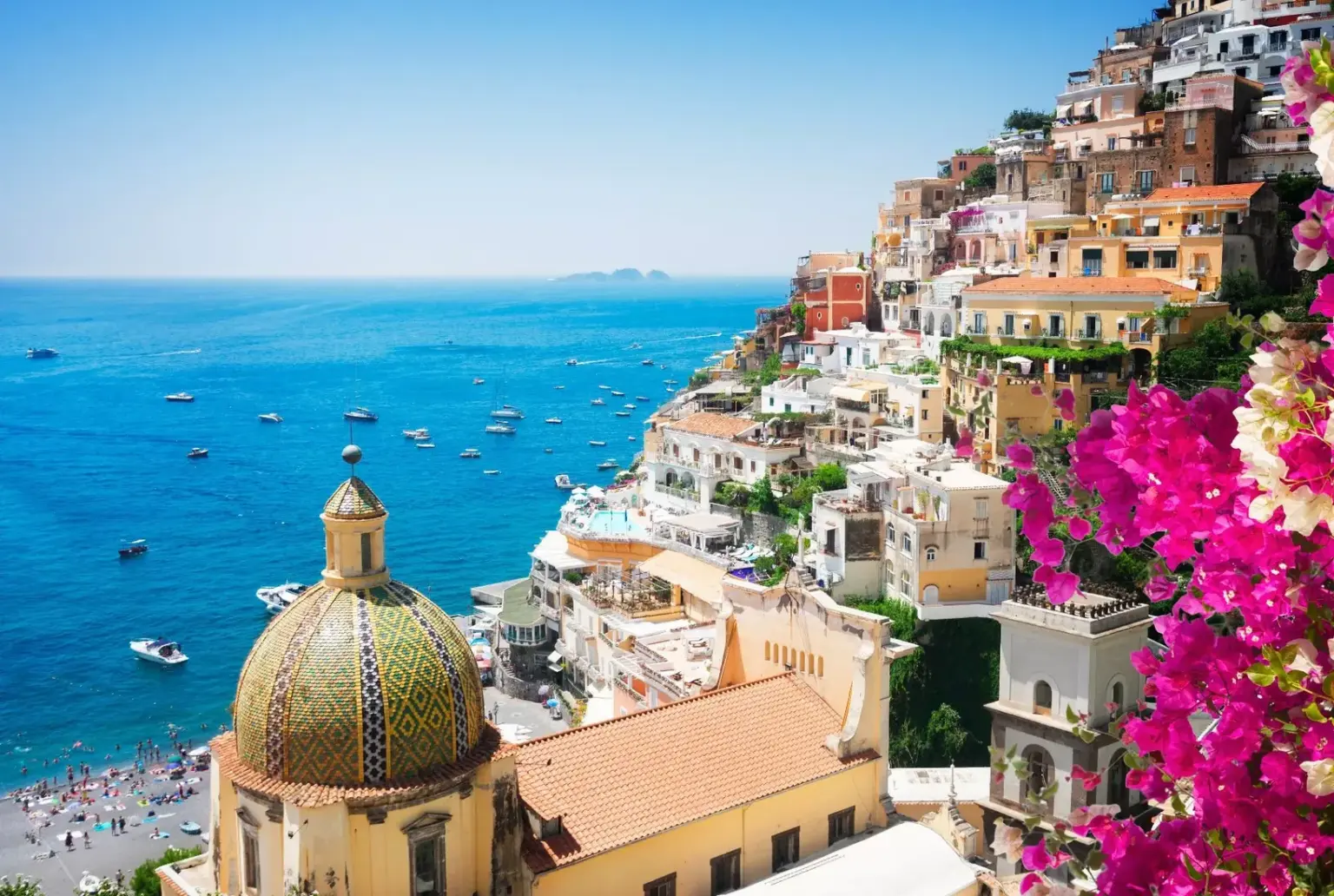
NAPLES, CAPRI & THE AMALFI COAST
Three nights in Naples, two at Le Sirenuse in Positano, two on Capri after the last ferry has left. 7 nights
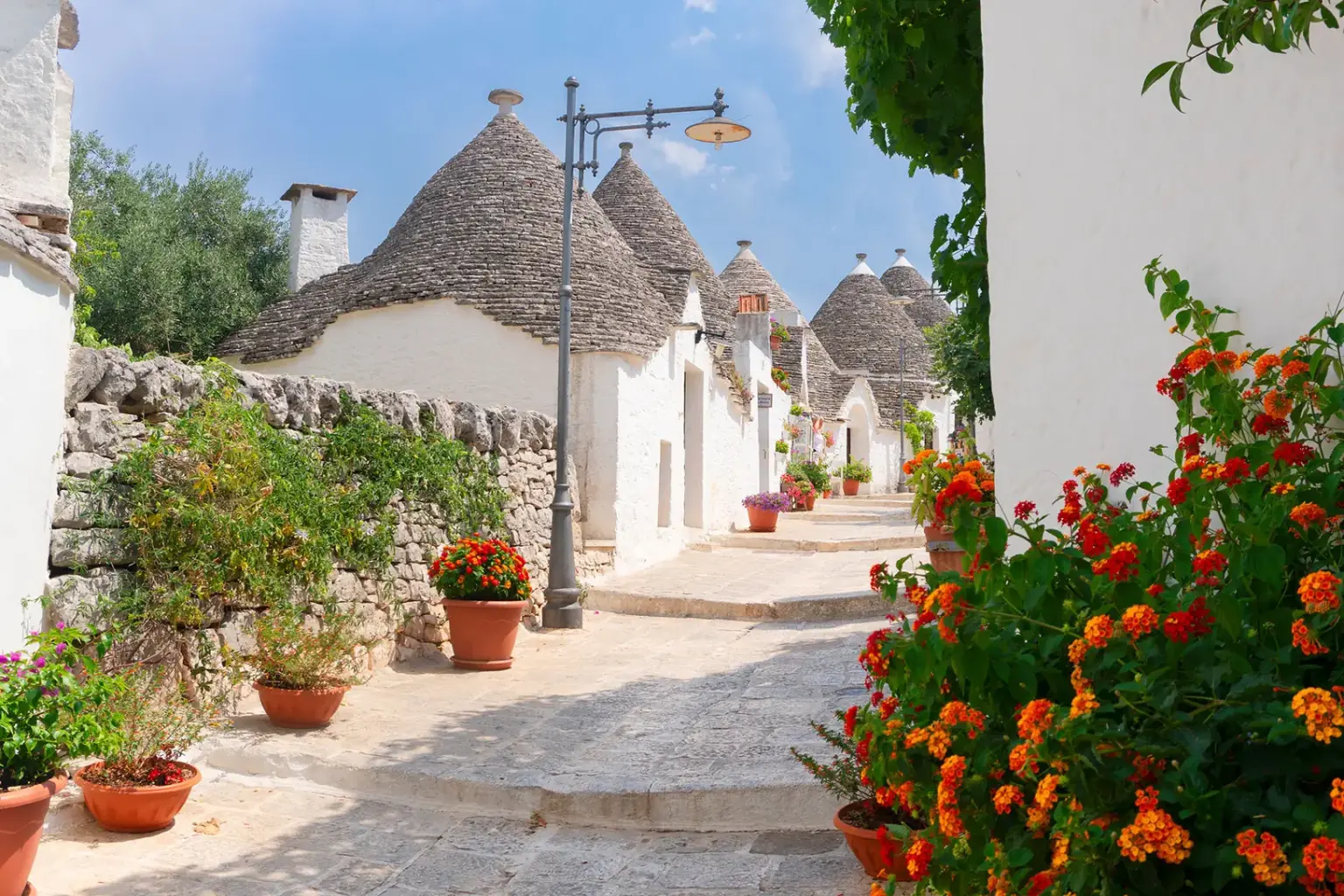
PUGLIA, THE ITALY I COME HOME TO
Five nights in one masseria, Lecce and the Salento, a night in the rock of Matera — the region I was born in. 8 nights
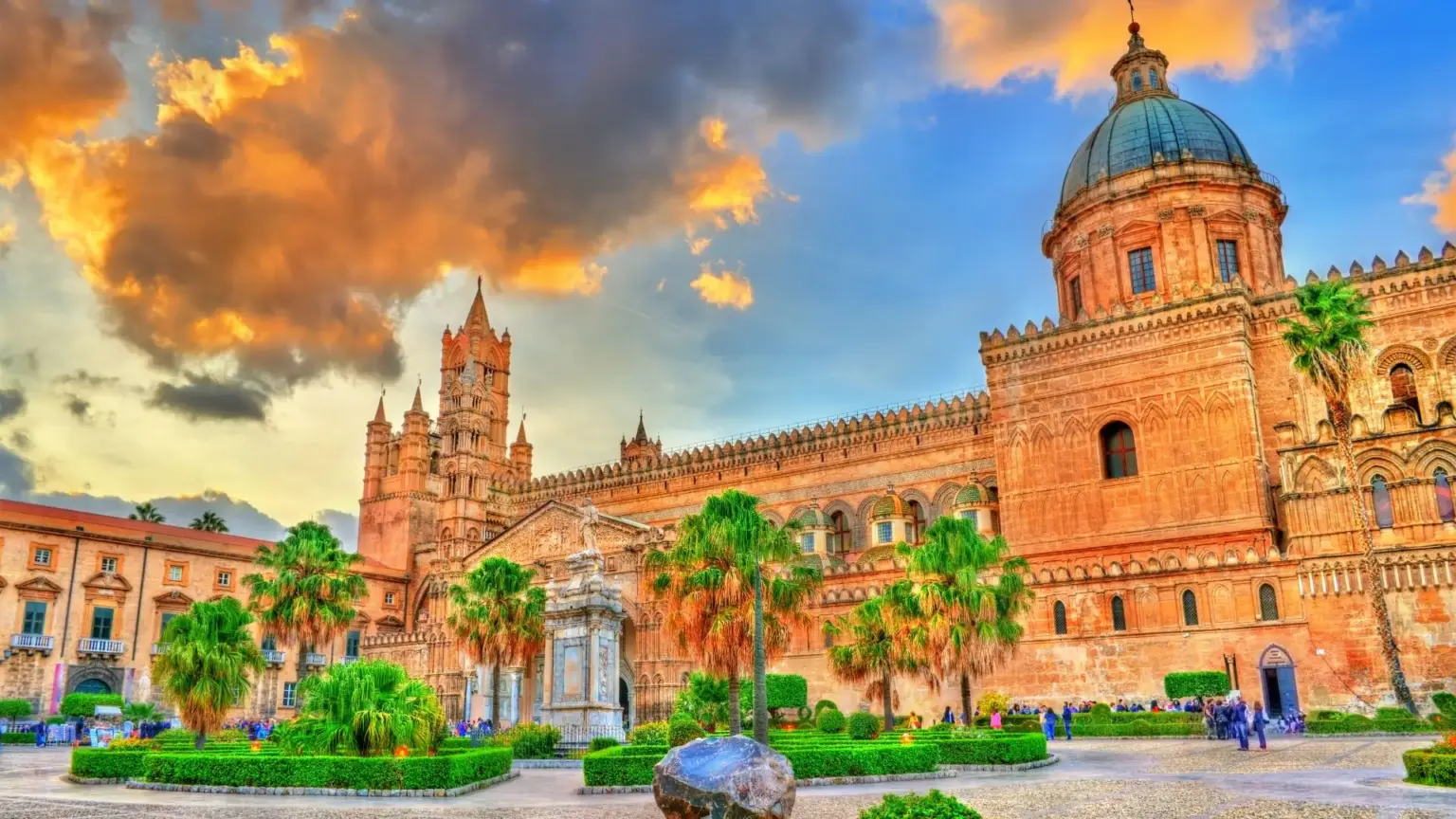
SICILY, THE ISLAND EVERYONE FALLS FOR
Catania in, Palermo out: Etna and Taormina, Baroque Noto, a night among the temples of Agrigento, four nights in Palermo. 9 nights
A free guide
Not sure this is your Italy?
The Curator’s Edit: Italy is my guide to six journeys I plan for gay travelers and how to tell which one is yours. Free, in your inbox within a minute.
Make this itinerary yours
This is a starting point, not a fixed package. Tell me your dates and how you like to travel — an extra night in Venice, the Amalfi Coast at the end, a night at the opera in Florence — and within two business days you will hear back from me with a first proposal for your trip, which we then shape together.

Francesco Mevoli
Founder, Gay Up Travel