
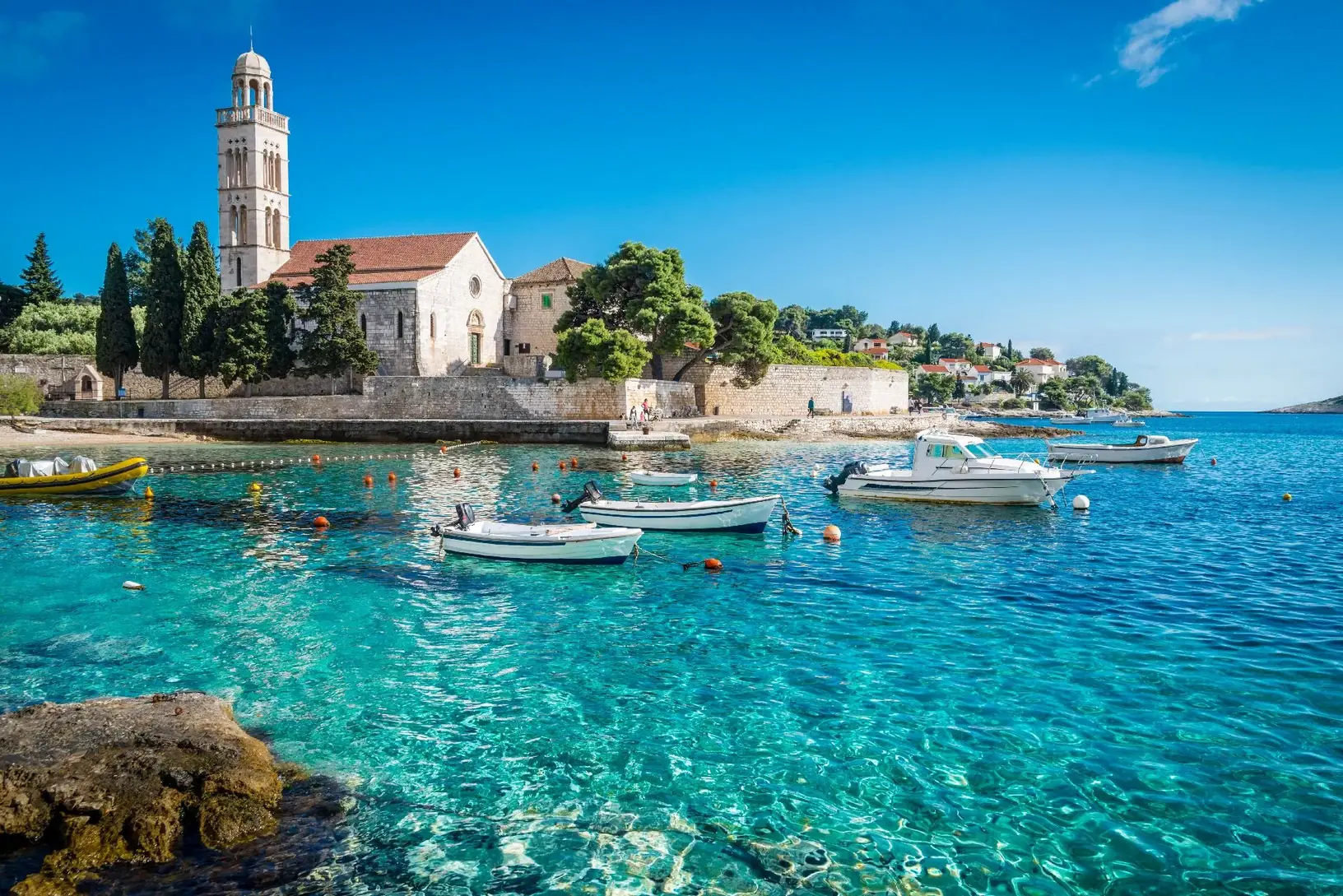
Croatia and Slovenia, from the Alps to the Adriatic
Why Croatia and Slovenia
I work with Croatia and Slovenia because they’re two of the most underrated countries in Europe — Adriatic light, mountain calm, towns where the host still cooks dinner. Our gay clients have always been welcomed warmly in Ljubljana and along the Dalmatian coast: small cities, real hospitality, no theatre. Ljubljana in particular is a quietly progressive capital — bookshops, riverside cafés, a relaxed civic feel. Dubrovnik, Split, the islands of Hvar and Vis — they reward travelers who arrive in shoulder season and stay slow. The version I design pairs Ljubljana’s pine forests and Dubrovnik’s limestone : a week that feels both alpine and Mediterranean, woven by people who know each other across the border.
When to go
May / June — September / October
Ideal length
9 — 10 nights
Price
From $7,250 pp (flights not included) (based on double occupancy)
The trip in a nutshell
Ten days, five anchor towns, a single arc that begins at the foot of the Julian Alps and ends on the southern Adriatic. You start in Ljubljana — a small green capital that walks like a village — drop down to the Istrian coast at Opatija, cross into the lake country of Plitvice, then follow the Dalmatian coastline through Split and the offshore islands all the way to Dubrovnik. Two nights in every base except Plitvice, where one night earns itself the morning you spend inside the park.
The thread I care most about is restraint. This is the part of Europe that gets oversold every summer — Game of Thrones tours in Split, cruise crowds at the city gates of Dubrovnik, day-trippers stacked four-deep at the Plitvice viewpoints. Our version of this trip routes around the worst of that. We move at the right hours, eat where the local family runs the kitchen, and let the coast do what it does best, which is open slowly. Both Slovenia and Croatia have been quietly ahead of much of southern Europe on LGBTQ+ rights for years — Croatia’s Life Partnership Act in 2014, Slovenia’s marriage equality in 2022 — and the welcome you’ll feel along the way reflects that, in the ordinary register of a kitchen and a hotel reception.
What we take care of

A tailor-made itinerary, built around your pace

Handpicked hotels in the right neighborhoods

Local experts, guides and key reservations

Private door-to-door transfers

Experiences designed around you, never a checklist

24/7 support — before and during your trip
Who this is for
This trip is for the gay traveler who’s already done the introductory European loops and wants somewhere coastal that hasn’t been flattened by the same five photographs. The kind of traveler who’d rather walk a Roman amphitheater at eight in the morning than queue at noon, who orders the local oysters because they’re farmed two coves over, who knows that a small Adriatic capital like Ljubljana is a quiet luxury in itself.
It’s not a beach trip in the recliner sense — there’s swimming if you want it, but the spine of the route is cities, islands, and the long coastal drive between them. It’s also not a party itinerary; the gay scenes in Ljubljana, Split and Dubrovnik are friendly but small, and this route spends most of its evenings on hotel terraces, in family-run kitchens, and on rooftop tables with the sunset over the Adriatic.
What this stretch of Europe does well, for the traveler I’m describing, is the unhurried welcome. Both countries have been ahead of much of southern Europe on LGBTQ+ rights for over a decade, and the temperature of the welcome reflects that — without rainbow flags doing the work that ordinary courtesy already does on its own.
Sample itinerary
A representative ten-day flow. Every itinerary is rebuilt around your dates, pace, and interests.

DAY 1 — Venice to Ljubljana | A small green capital
We pick you up in Venice in the morning and cross into Slovenia by mid-afternoon — a three-hour drive that sets the geography of the whole trip in your head before you start it. Check-in in central Ljubljana, a few minutes’ walk from the river. The first evening is yours: walk the pedestrian center along the Ljubljanica, cross the Triple Bridge, find a table on the riverbank for a quiet first dinner. Ljubljana is the smallest capital in this part of Europe, and you’ll feel that within an hour — it walks like a town that knows everyone.
DAY 2 — Ljubljana & Lake Bled | The capital and the alps
Morning is given over to a private walking tour of Ljubljana with a local guide — the Art Nouveau Dragon Bridge, the riverside market, the central square named for France Prešeren, the Slovene Romantic poet whose statue still gives the city its address. After lunch, your driver takes you forty minutes north into the Julian Alps to Lake Bled. The hilltop castle gives you the postcard view; from there, a traditional pletna boat takes you across to the chapel-topped island in the middle of the lake. The whole thing is small, walkable, and unhurried — the alpine half of the trip, done in one afternoon. Back to Ljubljana for the evening.
DAY 3 — Postojna, Predjama, and the Adriatic at Opatija
You leave Ljubljana mid-morning and drop south through the karst country toward the Slovenian coast. First stop is Postojna, the largest cave system in Europe open to visitors — twenty-four kilometers of underground galleries, the first stretch of which you ride on a small electric train before continuing on foot through the great hall. From there, a short drive brings you to Predjama, a sixteenth-century castle built into the mouth of a cave on a sheer cliff face — one of the more unusual photographs you’ll bring home. Cross the border into Croatia and arrive in Opatija by late afternoon. Opatija was the Habsburg riviera’s seaside resort in the nineteenth century and still wears that register: long sea promenade, palms, a quiet first night by the Adriatic.
DAY 4 — Istria | Pula, Motovun, truffle country
The Istrian peninsula is the part of Croatia that looks the most like Tuscany — Roman ruins, Venetian campaniles, hill towns above vineyards, and the same quality of late-afternoon light. You start in Pula, where the Roman amphitheater is the sixth-largest surviving in the world and you can walk the floor of it without a queue if you arrive early. Then inland to Motovun, a hill town stacked above a sea of vines and oak forest where Istrian truffles grow underneath. Lunch is in town — pasta with shaved truffle, a glass of Malvazija, the kind of meal you remember the room for. Back to Opatija by evening.
DAY 5 — Plitvice Lakes | The walk through the water
Early start from Opatija — the drive south to Plitvice is two and a half hours, and the park rewards arrival before the bus-tour wave. Sixteen terraced lakes, fed and connected by waterfalls and cascades, walked on a network of wooden boardwalks suspended just above the water. The full circuit is three to four hours on foot, with a short electric-boat crossing of the largest lake in the middle. Plitvice is the only single-night stop on this trip, and the reason is geography rather than preference — the park is in the middle of the country, and the right way to do it is to sleep close to the gates and be inside before nine the next morning. We choose a hotel twenty minutes from the entrance, with a long evening to read and recover.
DAY 6 — Plitvice to Split | Down through Zadar
You leave Plitvice after breakfast and head down to the Dalmatian coast. The drive crosses limestone country and opens, around midday, onto the first view of the Adriatic and the chain of small islands that runs all the way south. We stop in Zadar — a small peninsula city with two pieces of contemporary public art that have changed how people think about the place: the Sea Organ, where the Adriatic plays low chords through pipes built into the stone steps of the harbor, and Greeting to the Sun, a circular solar installation on the same waterfront. Both are the work of the same architect, both worth the stop. Continue south to Split in the late afternoon.
DAY 7 — Split & Trogir | Inside Diocletian, then the island
Morning in Split with a private local guide. The old town here is unusual: it’s built inside the walls of Diocletian’s retirement palace, a fourth-century imperial complex whose corridors and substructures the city of Split has lived inside for sixteen hundred years. We walk the cellars (used, more famously, as a film location for parts of HBO’s most-watched fantasy series), the peristyle, the cathedral that was once the emperor’s mausoleum. Lunch on the Riva, the seafront promenade. Afternoon in Trogir — fifteen minutes up the coast, an island town joined to the mainland by two short bridges, dense with Romanesque, Renaissance, and Venetian-period architecture in walking distance of each other. UNESCO-listed, and small enough to do properly in two hours. Back to Split for dinner.
DAY 8 — South to Dubrovnik | Pelješac, Ston, and the oysters
A scenic driving day, broken by stops that earn it. You cross the new Pelješac Bridge — opened in 2022, an engineering set-piece that for the first time connects southern Croatia to itself by land — and arrive on the Pelješac peninsula, a long ridge of vineyards that have been growing the Plavac Mali grape for centuries. We stop in Ston, where the medieval city walls (second only in Europe to the Great Wall in length) protected the salt pans that paid for the Republic of Dubrovnik. Lunch is the local thing here: oysters and mussels farmed in the sheltered bay below the walls, eaten with a glass of the Pelješac white. (If you’d like a winery visit on the way south, we’ll add it.) Dubrovnik by late afternoon.
DAY 9 — Dubrovnik | The walls, the streets, the rooftops
A morning panoramic drive around Dubrovnik’s city walls — the best way to read the geometry of the Old Town before you walk it. After a light lunch, a private walking tour through the limestone-paved streets: the cathedral, the Franciscan monastery’s fourteenth-century pharmacy, the Stradun. Late afternoon, the cable car up Mount Srd for the long view down over the city, the old port, and the islands offshore. Dinner tonight on a rooftop with a sunset view — this is the evening Dubrovnik does best, and we book early so the table is the one with the view, not the one beside the kitchen door.
DAY 10 — Departure | Dubrovnik airport
Final breakfast at the hotel, then your driver takes you to Dubrovnik airport — twenty-five minutes from the Old Town. If you have a late flight, we’ll add a morning at one of the small islands offshore (Lokrum is a fifteen-minute crossing) or an extra night in town to slow the goodbye.
Hotels we love
Five properties, five different registers of hospitality across Slovenia and Croatia. We match each one to your trip — and we’ll upgrade individual stays where it matters most to you.

Hotel Occidental · Ljubljana
A four-star contemporary property in central Ljubljana, walking distance to the river, the pedestrian center, and the main square. Superior city-view rooms, a clean modern register, generous breakfast. The right opening note for a small green capital — quiet, central, and out of your way.

Hotel Royal · Opatija
Four stars, central Opatija, a step above the seaside promenade and a short walk from the harbor. Park-side deluxe rooms, a swimming pool, and the right address for the Habsburg-era riviera town it sits in. Two nights here, with the Istrian peninsula reachable as a day’s drive in either direction.
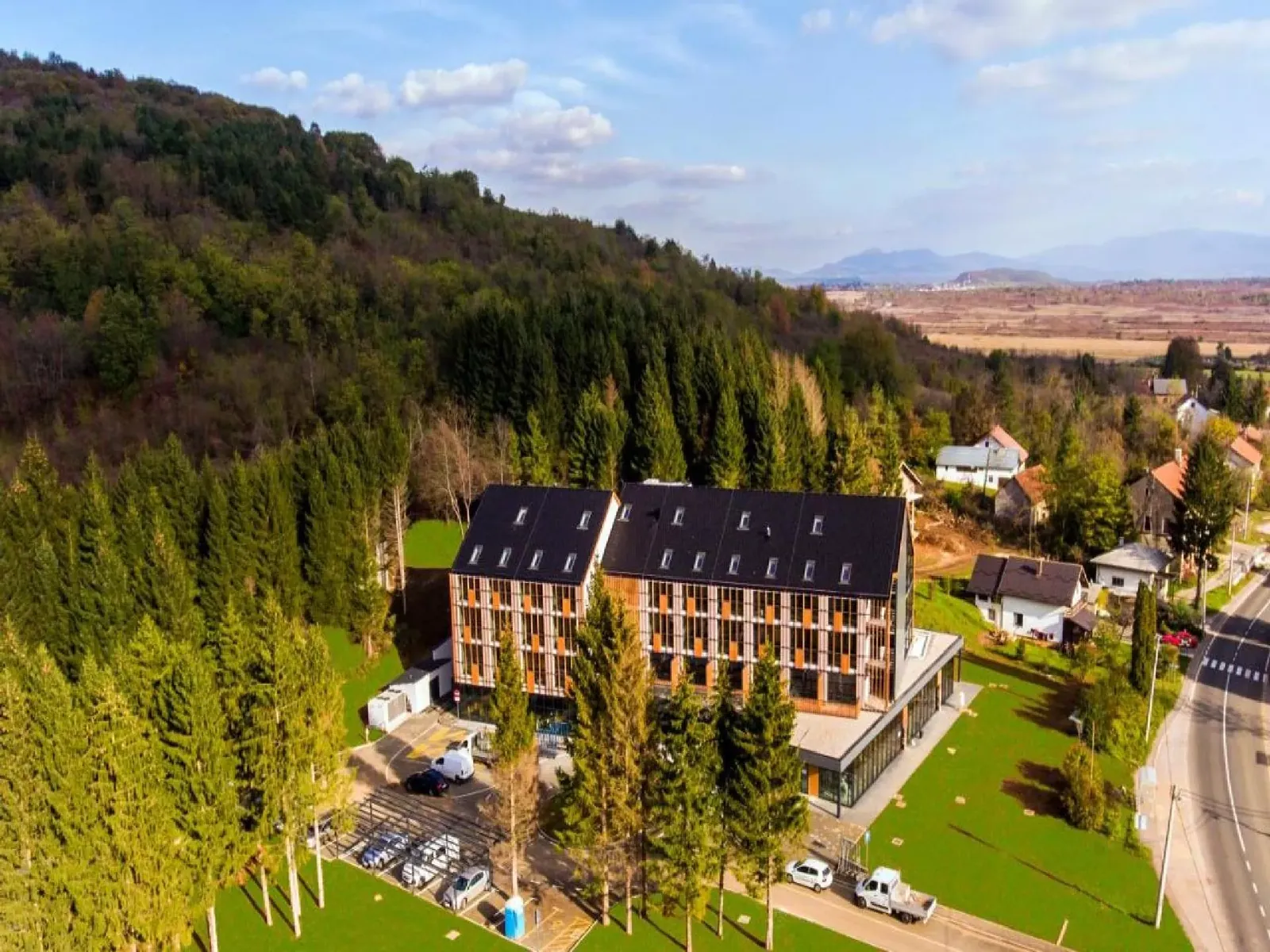
Hotel Lyra · Plitvice
Four stars, twenty minutes from the gates of Plitvice National Park, set in forest. Comfort rooms, full breakfast, gym. This is the one-night stop on the trip, and the property earns it: close enough to the park to be inside before the morning crowds, quiet enough that the evening before becomes the rest you actually need.

Hotel Amphora · Split
Four stars, set just above Žnjan beach, a short transfer from the old town and Diocletian’s palace. Standard or superior rooms, indoor and outdoor pools, a wellness floor with sauna and gym. The right base for a city you walk in the morning and swim from in the afternoon — and a useful step away from the noise of the cruise port.
Make this itinerary yours
Tell us your dates, pace, and hotel style — and within 48 hours we’ll come back with a tailored version of this itinerary, adjusted for the weather window you want, the nights you want to add or cut, and the travel companion you’re going with.
Make this itinerary yours
Tell us your dates, pace and hotel style—and within 48 hours we’ll come back with a tailored version of this itinerary.